
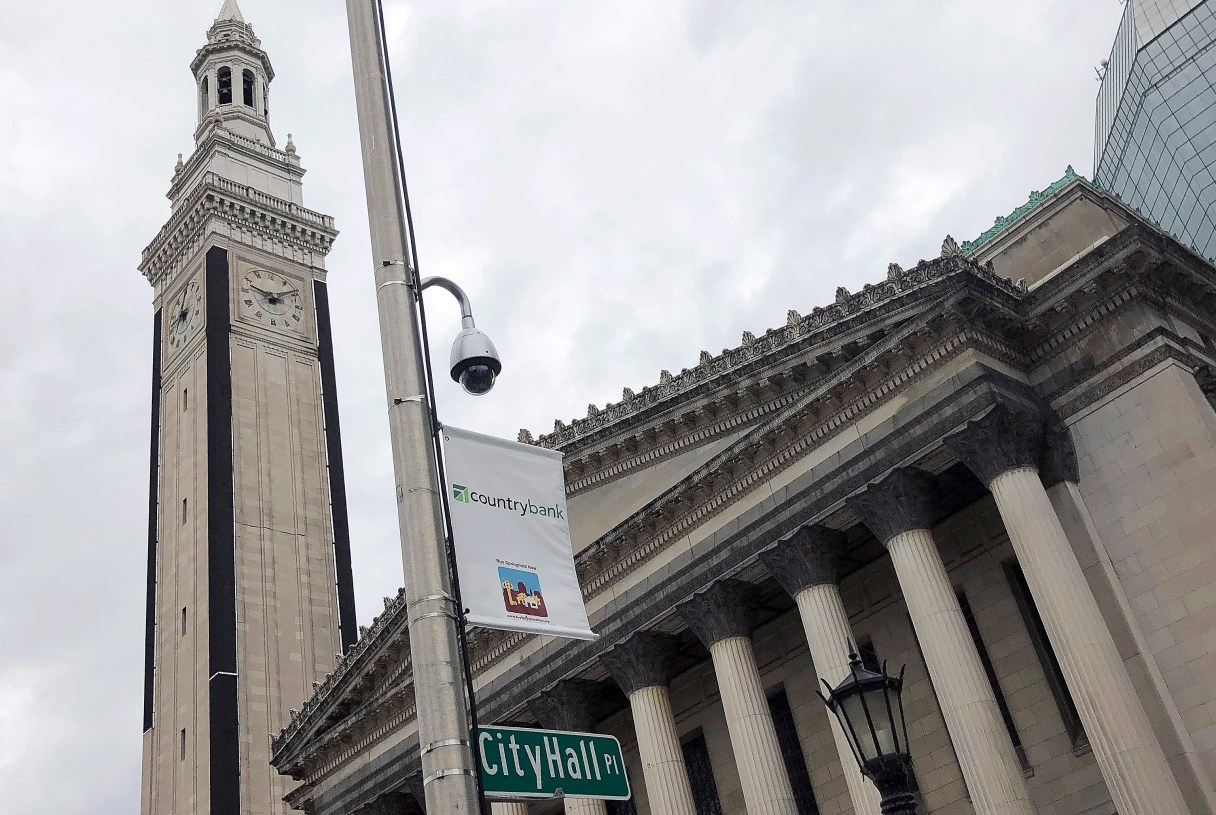
There is much about the future that keeps me up at night – AI weaponry, undetectable viral deepfakes, for example – but in the last few years, one technological threat has blipped my fear radar much faster than others.
That fear? Ubiquitous surveillance.
I am no longer sure that human civilization can undo or evade living under constant, extravagantly detailed physical and even psychic surveillance; as a species, we are not doing nearly enough to avoid always being watched or otherwise digitally recorded.
Your location, your purchases, video and audio from within your home and office, your online searches and every digital wandering, biometric tracking of your face and other body parts, your heart rate and other vital signs, your every communication – much of this data and more will be collected and analyzed by some combination of governments and corporations.
Why am I so pessimistic? Over the last year, as part of Times Opinion’s Privacy Project, I’ve participated in experiments in which my devices were closely monitored to determine the kind of data that was being collected about me. The experiments have given me new insight into the psychology underpinning surveillance; I’ve realized how blind we are to the kinds of insights tech companies are gaining about us through our gadgets.
That’s why, whether under American or European democracy or Chinese authoritarianism, few of our cultural or political institutions are even much trying to tamp down the surveillance state.
In China, the government is building a frightening surveillance dragnet in broad daylight, stitching together facial recognition, fingerprint and other databases into an all-seeing eye aiming to closely watch more than a billion citizens.
Yet the United States and other supposedly liberty-loving Western democracies have not ruled out such a future. Just consider the odd politics surrounding privacy invasion. Donald Trump and his supporters repeatedly argue that the FBI is corrupt and untrustworthy. Yet, like Barack Obama before him, Trump and the Justice Department are pushing Apple to create a backdoor into the data on encrypted iPhones – they want the untrustworthy FBI and any local cop to be able to see everything inside anyone’s phone.
Apple, mercifully, is resisting, just as it did the request of Barack Obama’s Justice Department to create a loophole in iPhone security – but the fact that both Obama and Trump agreed on the need for breaking iPhone encryption suggests how thoroughly political leaders across a wide spectrum have neglected privacy as a fundamental value worthy of protection.
Indeed, because of a dearth of laws protecting our privacy, Americans are sleepwalking into a future nearly as frightening as the one the Chinese are constructing. I choose the word “sleepwalking” deliberately, because when it comes to digital privacy, a lot of us prefer the comfortable bliss of ignorance.
In recent months my colleagues at The New York Times and other media outlets have published a series of shattering investigations into modern digital surveillance. Among other revelations: Advertising companies and data brokers are keeping insanely close tabs on smartphones’ location data, tracking users so precisely that their databases could arguably compromise national security or political liberty. There are few meaningful checks on scanning for people using facial recognition, genetic profiles or other biometric data. Tracking technologies have become cheap and widely available – for less than $100, my colleagues were able to identify people walking by surveillance cameras in Bryant Park in Manhattan.
This past weekend, The Times’ Kashmir Hill reported on a company called Clearview AI that has created a tool that “could end your ability to walk down the street anonymously.” By scraping pictures from Facebook, YouTube and other websites to create a huge database of faces, the company lets cops identify people just by snapping a photo. It’s Shazam for faces, not very different from the kind of facial recognition tools we worry the authorities may be using in China – and even though hundreds of police departments may have access to it, almost no one outside the company understands how it works.
Late last year, with the help of Stuart Thompson, an Opinion editor, I set up my phone to monitor how certain apps were tracking me. I focused on apps that required me to grant them access to my physical location – among them apps to find cheap gas, coupons and nearby retail discounts, and to otherwise help me navigate and find deals as I wandered about the world.
The upshot: As the location-tracking apps followed me, I was able to capture the pings they sent to online servers – essentially recording their spying. I sent the data to Stuart and his team, who mapped the pings. Their picture shocked me; the apps had captured much more data and more often than I had imagined when I’d said yes to their tracking.
Here’s what we found on one Sunday afternoon last year: The apps see me drive out one morning to the gas station, then to the produce store, then to Safeway; later on I passed by a music school, stopped at a restaurant, then Whole Foods. But location was only one part of the data the companies had about me; because geographic data is often combined with other personal information – including a mobile advertising ID that can help merge what you see and do online with where you go in the real world – the story these companies can tell about me is actually far more detailed than I can tell about myself.
Like a lot of people, I’ve long justified my apathy about privacy through innocence: I’m a stand-up guy – what do I have to hide?
But looking at the God’s-eye-view that a few coupon apps can glean about me, I can no longer pretend I’ve got nothing to worry about. Sure, I’m not a criminal – but do I want anyone to learn everything about me?
Because those are the stakes. The remaining uncertainty about the surveillance state is not whether we will submit to it – only how readily and completely, and how thoroughly it will warp our society.
Will we allow the government and corporations unrestricted access to every bit of data we ever generate, or will we decide that some kinds of collections, like the encrypted data on your phone, should be forever off limits, even when a judge has issued a warrant for it?
In the future, will there be room for any true secret – will society allow any unrecorded thought or communication to evade detection and commercial analysis? And, if there can be no more secrets, how will we account for what we lose? How completely will living under surveillance numb creativity and silence radical thought?
I’m worried we’ll soon be forced to find out.
The New York Times