
Friday, November 13, 2026Nov 13

Some hospitals wary as new liver transplant rules begin

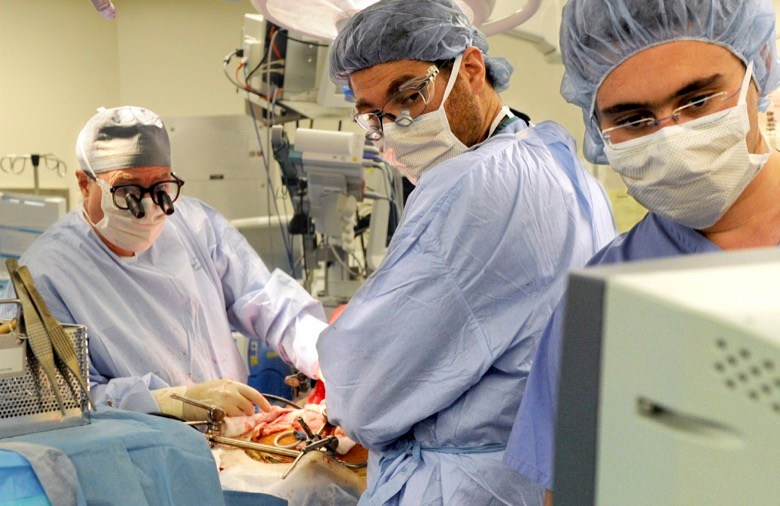
In this Sept. 13, 2011, file photo, Columbia University Medical Center Transplant Services surgeons watch a monitor as they perform a liver transplant at New York-Presbyterian Hospital in New York. Long-delayed rules that will more broadly share scarce donated livers go into effect Tuesday, Feb. 4, 2020. The aim is to make the wait for livers, and eventually all organs, less dependent on your ZIP code. (Keelin Daly/Hearst Connecticut Media via AP, File)
In this Sept. 13, 2011, file photo, Columbia University Medical Center Transplant Services surgeons watch a monitor as they perform a liver transplant at New York-Presbyterian Hospital in New York. Long-delayed rules that will more broadly share scarce donated livers go into effect Tuesday, Feb. 4, 2020. The aim is to make the wait for livers, and eventually all organs, less dependent on your ZIP code. (Keelin Daly/Hearst Connecticut Media via AP, File) In this Sept. 13, 2011, file photo, Columbia University Medical Center Transplant Services surgeons watch a monitor as they perform a liver transplant at New York-Presbyterian Hospital in New York. Long-delayed rules that will more broadly share scarce donated livers go into effect Tuesday, Feb. 4, 2020. The aim is to make the wait for livers, and eventually all organs, less dependent on your ZIP code. (Keelin Daly/Hearst Connecticut Media via AP, File)

WASHINGTON (AP) – Long-delayed rules that will more broadly share scarce donated livers go into effect Tuesday, to the dismay of some hospitals in Tennessee, Kansas and other states that fear their patients may lose out.

Where you live makes a difference in how sick you have to be to get an organ transplant, and wealthier patients sometimes travel to other states to get on shorter waiting lists. The new rules are an attempt to ease that geographic disparity by giving the sickest patients first chance at a donated liver even if it has to be flown about 500 miles to reach them.

The aim is to make the wait for livers, and eventually all organs, less dependent on your ZIP code. The United Network for Organ Sharing, or UNOS, which runs the nation’s transplant system, says the policy will save lives.

“We’re hopeful this can make it more equal and help everybody who’s waiting,” said Dr. Julie Heimbach, a Mayo Clinic transplant surgeon and past chair of UNOS’ liver committee.

Under the new policy, patients near death within 500 nautical miles (575 miles) of a donor hospital will be offered a matching liver first. If there are no takers, it will be offered next to progressively less sick patients at different distances within that circle.