
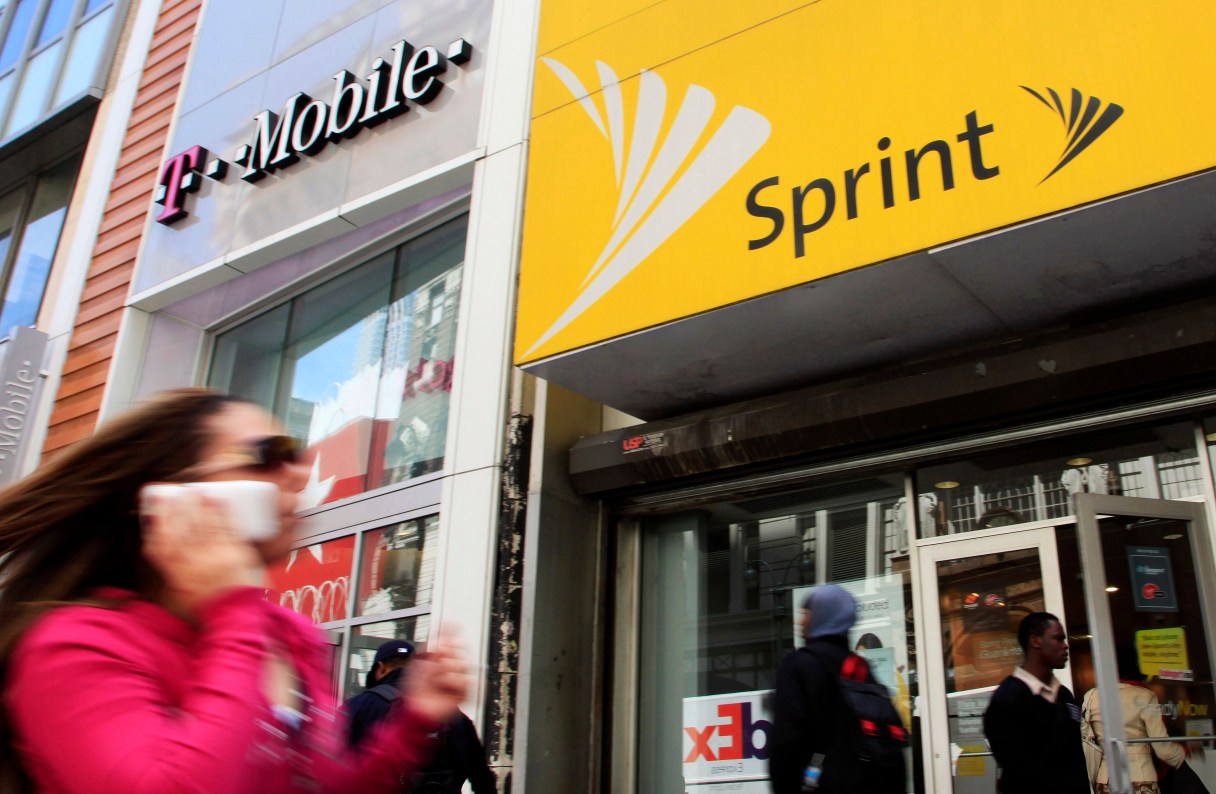
NEW YORK (AP) – A federal judge has cleared a major path for T-Mobile to buy Sprint for $26.5 billion, citing T-Mobile’s track record in promoting competition, even as legal scholars and consumer advocates warn about higher phone bills.
Judge Victor Marrero in New York said he believed the new T-Mobile would continue to compete aggressively with Verizon and AT&T, the industry giants whose size it now rivals. T-Mobile, the No. 3 U.S. phone company, has been known for such consumer-friendly, industry-shattering measures as abolishing two-year service contracts and restoring unlimited data plans.
Though the deal still needs a few more approvals, T-Mobile expects to close it as early as April 1.
T-Mobile has promised not to raise prices for three years and said “efficiencies” it gets from a more powerful network will translate to lower prices down the road. T-Mobile also argued that the combined T-Mobile and Sprint would be able to build a better next-generation, 5G cellular network than either company could alone.
But more than a dozen state attorneys general had sued to block the deal, saying one fewer phone company, even a smaller rival like Sprint, would cost Americans billions of dollars in higher bills. One of the leading parties, New York Attorney General Letitia James, said her office was considering an appeal. She said Tuesday’s ruling “marks a loss for every American who relies on their cell phone.”