
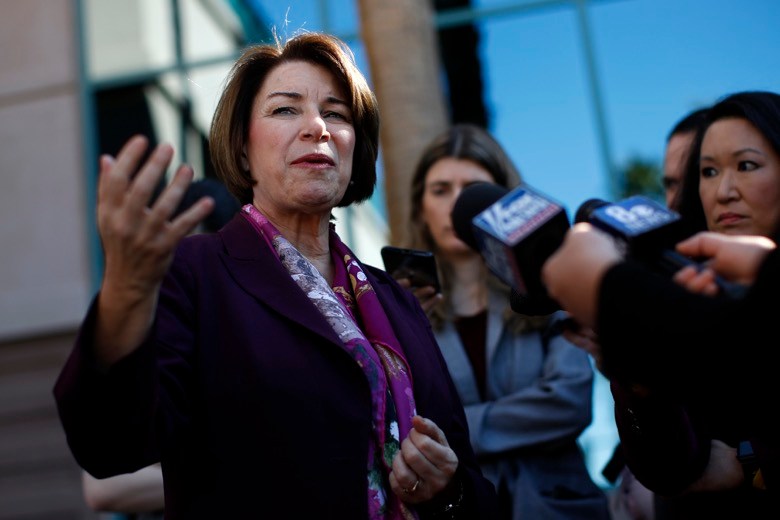
LAS VEGAS (AP) – Democratic presidential candidate Amy Klobuchar says she no longer believes English should be the national language of the U.S., disavowing a vote she took more than a decade ago as she tries to build support in a state where Hispanics make up a critical constituency.
Campaigning in Las Vegas, the three-term Minnesota senator said Friday that she has changed her stance since voting for an English-language amendment in 2007 and has “taken a strong position against” it. She also blasted President Donald Trump for using immigrants as “wedges” and said as president she would work with Republicans to achieve comprehensive immigration reform.
Klobuchar’s record on immigration is under scrutiny after her third-place finish in the New Hampshire primary this week revived her campaign and sent her on to Nevada’s Feb. 22 caucuses with fresh momentum. After focusing much of her campaign on the first two voting states – Iowa and New Hampshire, both predominantly white – she’s now navigating a much more diverse electorate, where some of her moderate positions and willingness to vote with her Republican colleagues could be a liability.
Klobuchar was one of 17 Democrats to support a 2007 amendment that would have reversed President Bill Clinton’s executive order requiring federal agencies to provide materials in languages other than English. It passed 64-33, but the larger immigration bill died.
The amendment’s sponsor, Oklahoma Republican Sen. Jim Inhofe, said after the June 2007 vote that the amendment was about “preserving our culture and heritage” and would “send a message to all those who have come to our country and all those who will immigrate here in the future that English is the language of our land.”