
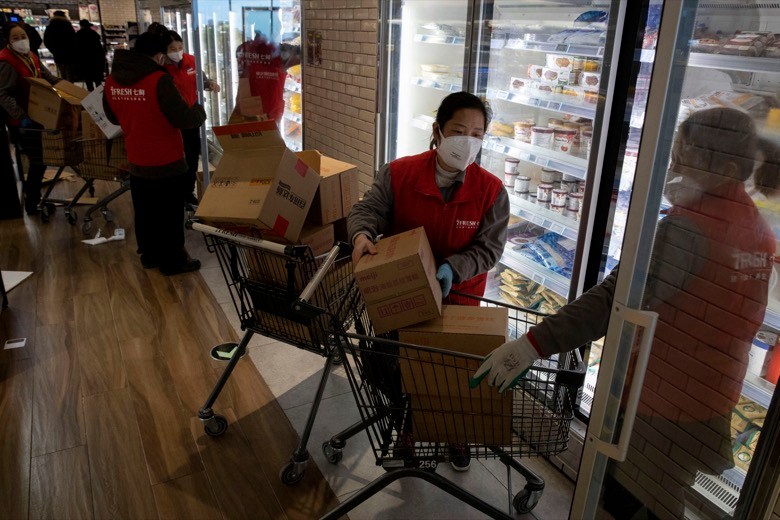
BEIJING (AP) – Wang Feng, house-bound by China’s virus outbreak, counts on the parka-clad delivery drivers of e-commerce giant JD.com to keep her kitchen stocked.
Demand for online food vendors has surged since China’s government told the public to stay home as part of the most sweeping anti-disease controls ever imposed.
On Tuesday, Wang’s phone buzzed with a text message that a delivery had arrived. The retiree bundled up against the winter cold, put on a face mask and emerged from her apartment complex to collect walnut milk and other goods from shelves on the sidewalk – an anti-virus measure to limit contact with drivers who normally go door to door.
“They work really hard, and it’s dangerous,” said Wang. “Without their services, we would not be able to survive at all.”
JD.com Inc. and rivals including Pinduoduo, Missfresh Inc. and Alibaba Group’s Hema are scrambling to fill a boom in orders while trying to protect their employees.