
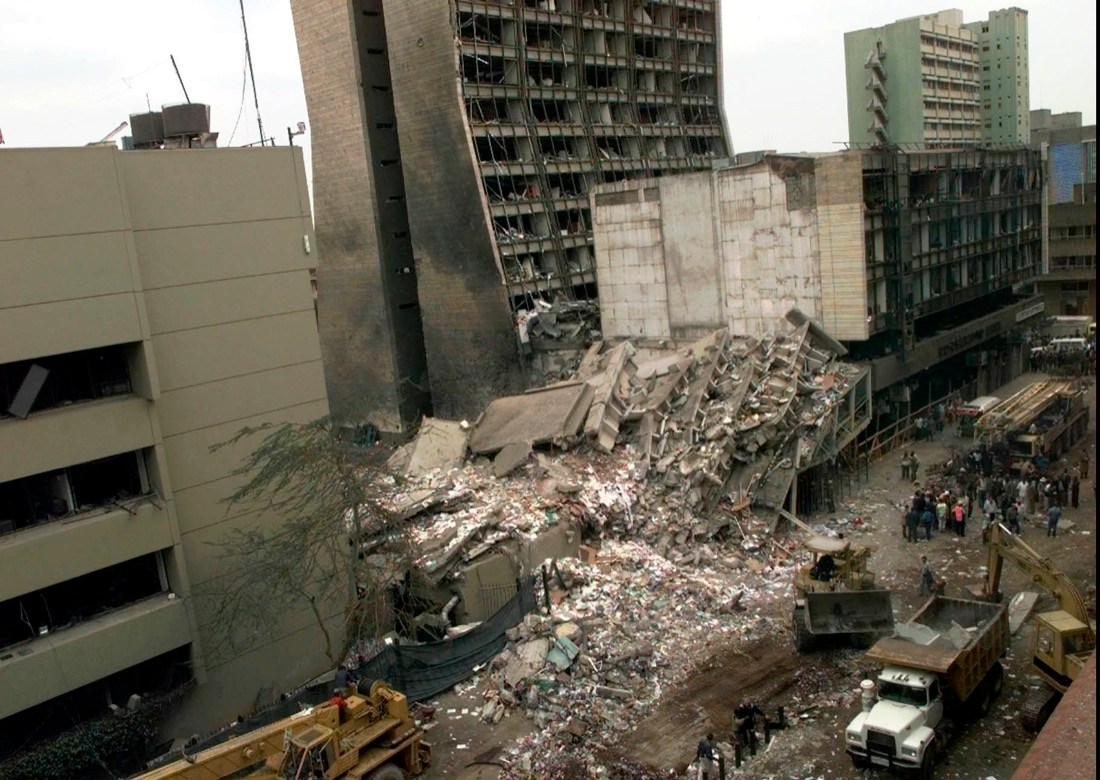
WASHINGTON (AP) – Doreen Oport was pulled from the rubble of the U.S. Embassy in Nairobi, Kenya, in 1998 covered in blood. Her hair was burned from the bombing. Pieces of metal and glass were embedded in her skin.
The two decades since the bombing have been a difficult and “painful journey,” she said in a telephone interview this past week from her current home in Texas.
“I was angry. I was sad. I was annoyed. I just couldn’t fathom that a human being could do this to another human being,” said Oport, 59, who had worked at the embassy as a senior immigration assistant, helping refugees from other countries relocate to the United States and Americans adopting children from Kenya.
The bombing on Aug. 7, 1998, and the nearly simultaneous one at the U.S. Embassy in Dar es Salaam, Tanzania, were the first major attacks on U.S. targets by al-Qaida. More than 200 people were killed and thousands were injured.
On Monday in Washington, Oport will join other victims of the bombings to hear arguments in a Supreme Court case that could affect the compensation they may receive for their injuries. The victims and their families, most of them foreign citizens, sued Sudan in U.S. court beginning more than a decade ago. They accused Sudan of causing the bombings by aiding al-Qaida and leader Osama bin Laden, who lived in Sudan in the 1990s.