
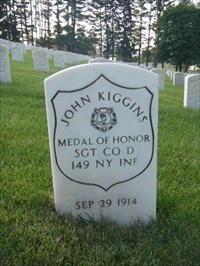
While Andrews’ Raiders were the first recipients of the Medal of Honor, they were not the only individuals recognized “for particular deeds of most distinguished gallantry in action” while engaged in combat in the Chattanooga region.
As the regulations relative to the earliest Medals of Honor noted “In order that the … Medal of Honor may be deserved, service must have been performed in action of such a conspicuous character as to clearly distinguish the man for gallantry and intrepidity above his comrades – service that involved extreme jeopardy of life or the performance of extraordinary hazardous duty.” That one can stand near the Tennessee River and glance toward Chattanooga, Chickamauga, Missionary Ridge, Lookout Mountain and Wauhatchie and be reminded of Medal of Honor recipients denotes the intensity of the fighting and the valorous actions of numerous soldiers. These stories of individual displays of commitment, sacrifice, courage and integrity still inspire.
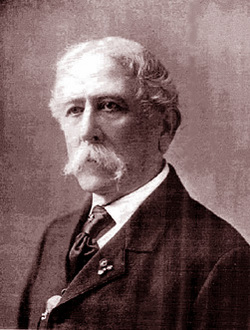 Capt. Moses Veale / Contributed photo
Consider Capt. Moses Veale of Company F, 109th Pennsylvania Infantry. The Battle of Wauhatchie, fought on Oct. 18, 1863, pitted Gen. J. W. Geary, Second Division of the Twelfth Army Corps, against Gen. James Longstreet’s Division of Gen. Lee’s Army Corps. Gen. Geary, with less than 1,500 men, was very well aware that Confederate troops were billeted in the area after a local woman sent word to Geary that the Rebs were gathering beneath Lookout Mountain. Shortly after midnight, the Union forces fell under attack, with little protection other than a rail fence reconstructed to serve as a breastwork. In more than three hours of intense fighting, men and horses fell so rapidly that only two guns in the artillery could be used. Yet, the Union forces refused to yield to the superior numbers.
Among the courageous troops was Veale, in the thickest area of the fight, who displayed, according to Gen. Geary’s report to Washington, the “coolness, zeal, judgment and courage.” Capt. Veale was struck four times by enemy bullets, his horse was shot from beneath him and yet he refused to give up or abandon his post, remaining at the head of his company, directing his men’s fire. Geary penned that “the enemy realized their numerical strength was nothing against such bravery and valor.”
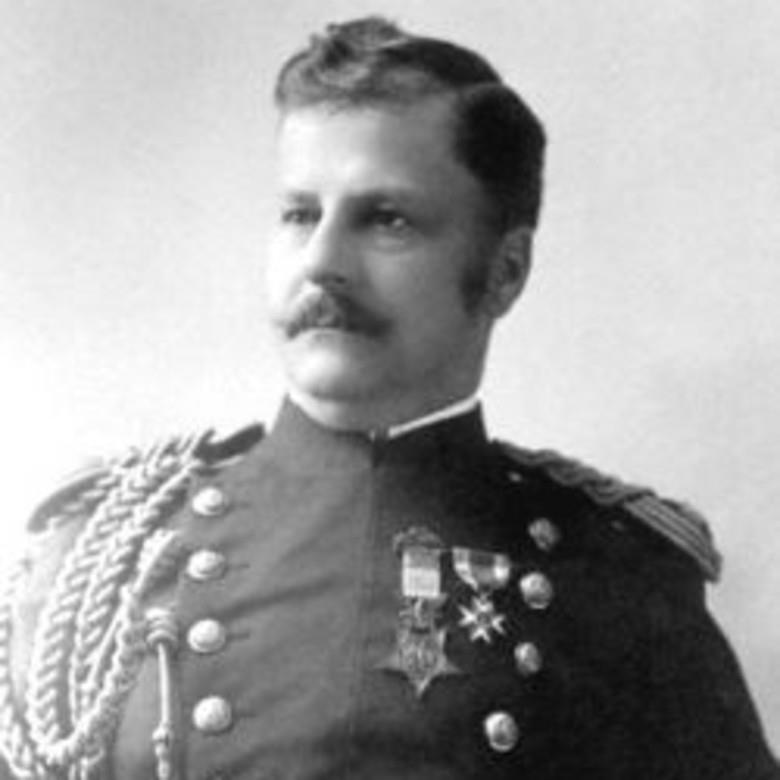 1st Lt. Arthur MacArthur Jr. / Contributed photo
While most would recognize the name of Gen. Douglas MacArthur, MOH, and many would recognize a photograph of the general and his famous pipe, few know the story of his father, 1st Lt. Arthur MacArthur Jr., 24th Wisconsin Volunteer Infantry, U.S. Army, who was awarded the Medal of Honor for action on Missionary Ridge. On Nov. 25, 1863, MacArthur was one of more than 50,000 Union soldiers who stormed Confederate defenses along the ridge. When the soldier responsible for carrying their unit’s flag was mortally wounded, MacArthur grabbed the flag, shouted “On Wisconsin!” and ran full speed toward the Confederate lines. He was shot twice before planting the flag in the middle of the Southerners’ fortifications. Inspired by his courage, more than 15,000 Union troops followed and by sunset, the Confederates retreated toward Georgia, leaving the Union in control of the “Gateway to the Deep South.” It is alleged that Gen. U.S. Grant declared that “a nail had been driven into the coffin of the Confederacy.” Interestingly, MacArthur was only 18.