
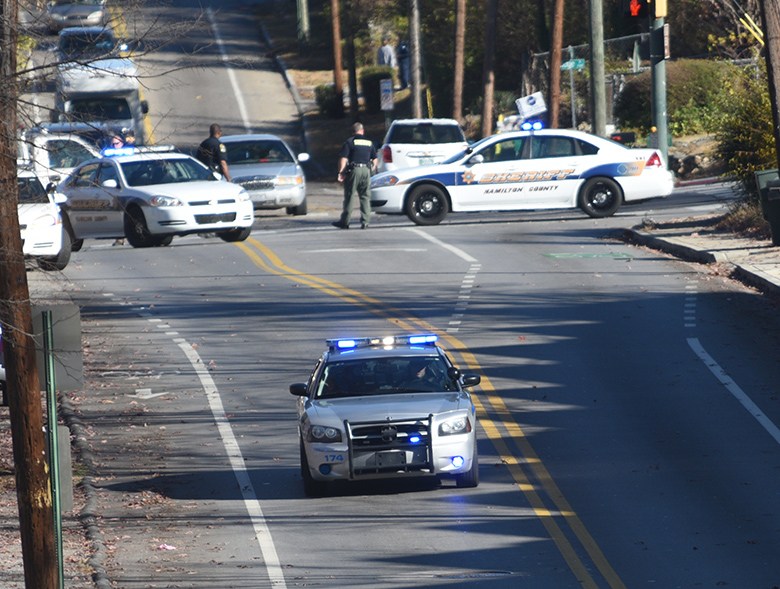
High-speed pursuits have long been a Catch-22 in law enforcement. On the one hand, police have to avoid putting the public in danger by operating a 2-ton vehicle at high speed while pursuing an erratic driver who is also in a 2-ton vehicle. On the other hand, police don’t want to send the message that perpetrators can get away if they flee.
“That police vehicle is a much more dangerous weapon than any police handgun,” said Fred Shenkman, an emeritus professor of criminology at the University of Florida who has taught and consulted with law enforcement agencies across the country for more than 40 years.
“You’ve got sort of an unguided missile, compared to a handgun,” he said. “The damage that could be done with two, 4,000-pound vehicles going 90 mph. And you’re out there trying to make things safer. But on the other hand, you can’t just let people go.”
From 1996-2015, an average of 355 people, or about one person per day, were killed annually in pursuit-related crashes, according to a 2017 U.S. Department of Justice report.