
Thursday, November 12, 2026Nov 12

Survivor in Slovenia turns 100 on Holocaust Remembrance Day

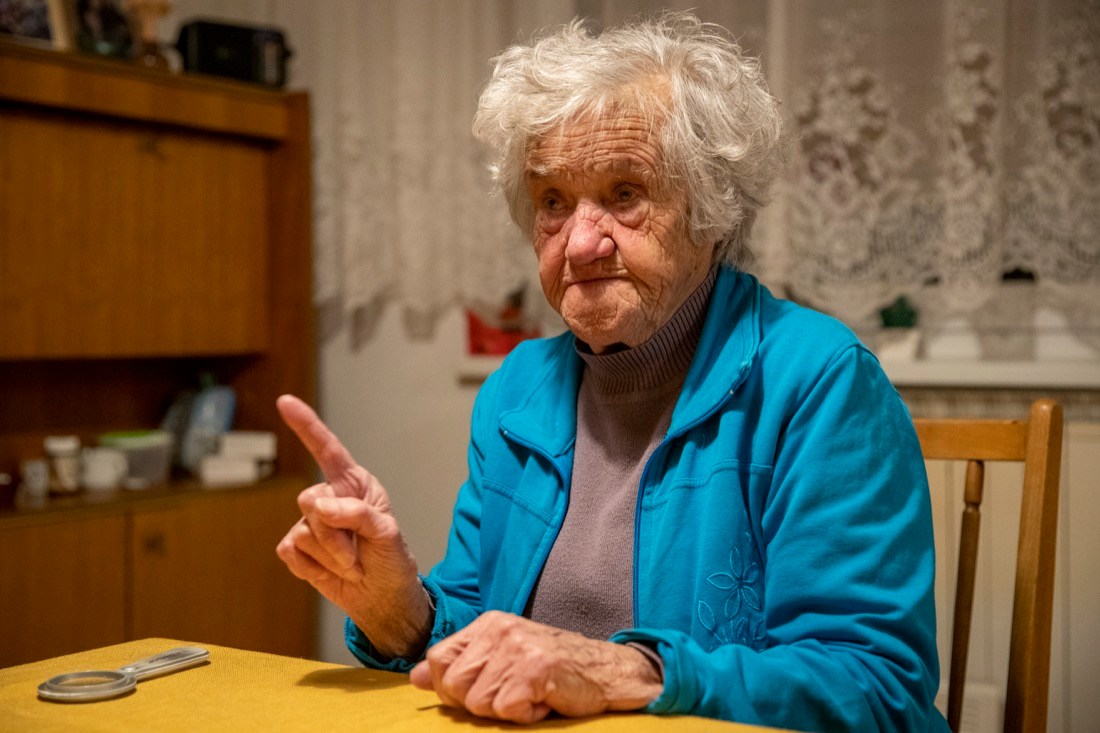
In this photo taken Friday, Jan. 24, 2020, Nazi camps survivor Marija Frlan, who will turn 100 on the Holocaust Remembrance day, talks to the Associated Press during an interview at her home in Rakek, Slovenia. Frlan, who was held at the Ravensbruck camp in northern Germany for over a year in 1944-45, will join other survivors and officials in Poland on Monday for the ceremonies marking the 75th anniversary of the liberation of the Auschwitz camp. (AP Photo/Darko Bandic)
In this photo taken Friday, Jan. 24, 2020, Nazi camps survivor Marija Frlan, who will turn 100 on the Holocaust Remembrance day, talks to the Associated Press during an interview at her home in Rakek, Slovenia. Frlan, who was held at the Ravensbruck camp in northern Germany for over a year in 1944-45, will join other survivors and officials in Poland on Monday for the ceremonies marking the 75th anniversary of the liberation of the Auschwitz camp. (AP Photo/Darko Bandic) In this photo taken Friday, Jan. 24, 2020, Nazi camps survivor Marija Frlan, who will turn 100 on the Holocaust Remembrance day, talks to the Associated Press during an interview at her home in Rakek, Slovenia. Frlan, who was held at the Ravensbruck camp in northern Germany for over a year in 1944-45, will join other survivors and officials in Poland on Monday for the ceremonies marking the 75th anniversary of the liberation of the Auschwitz camp. (AP Photo/Darko Bandic)

RAKEK, Slovenia (AP) – For Marija Frlan it’s as symbolic as it can get: A survivor of a Nazi concentration camp during World War II, the Slovenian woman turns 100 years old on Monday, the international Holocaust Remembrance Day.

Frlan, who was held at the Nazi’s Ravensbrueck camp in northern Germany for over a year in 1944-45, will join other survivors and officials in Poland on Monday for ceremonies marking the 75th anniversary of the liberation of the Auschwitz death camp.

Ahead of the ceremonies, Frlan told The Associated Press that one could talk at length about what it was like in the Ravensbrueck camp, but that only those who were there really know how horrific it was.

“The ones who didn’t survive this, they can’t understand, no,” the energetic woman said at her home in the small village of Rakek in southwestern Slovenia. “It was terrible.”

Frlan said prisoners at the Nazi camp for women were given just enough food to survive and had to work throughout the day. Obligatory inspections were held outside every morning, lasting for at least one hour.