
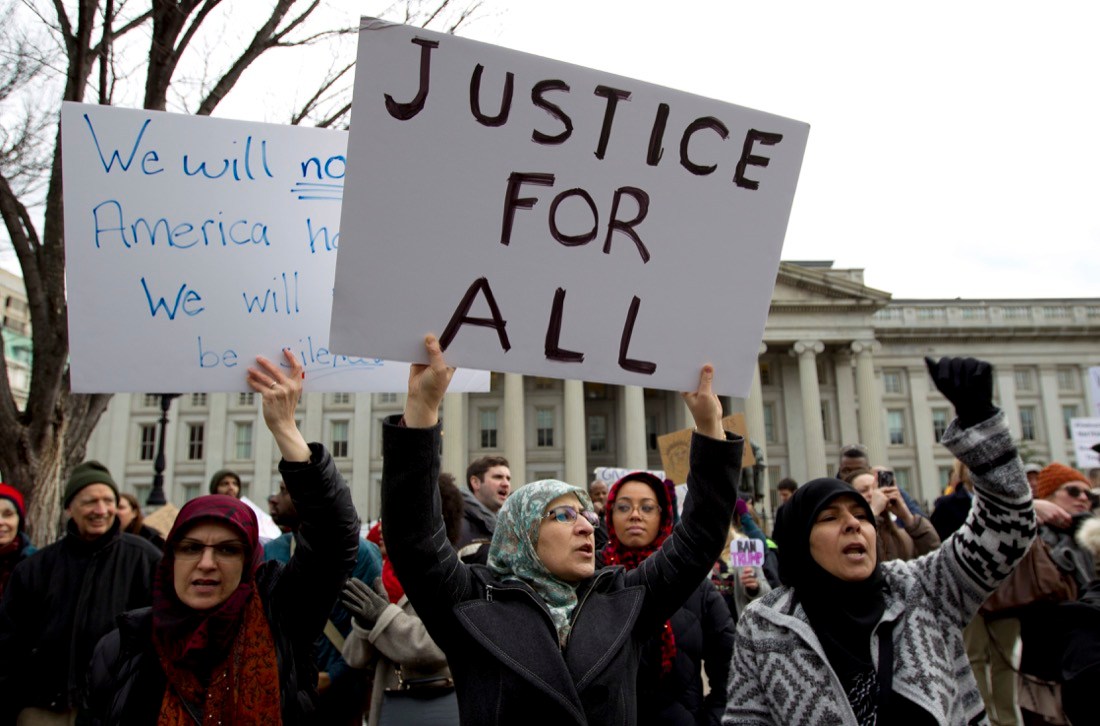
RICHMOND, Va. (AP) – After the U.S. Supreme Court upheld President Donald Trump’s ban on travelers from several predominantly Muslim countries in 2018, the ruling appeared to shut down legal challenges that claimed the policy was rooted in anti-Muslim bias.
But a federal appeals court in Richmond is set to hear arguments from civil rights groups hoping to keep the challenges alive.
The 4th U.S. Circuit Court of Appeals will hear arguments Tuesday in three lawsuits filed by U.S. citizens and permanent residents whose relatives have been unable to enter the U.S. because of the travel ban, which was first imposed shortly after Trump took office in January 2017.
The court is being asked to decide whether a federal judge in Maryland made a mistake when he refused to dismiss constitutional claims made in a lawsuit filed by the International Refugee Assistance Project despite a 2018 U.S. Supreme Court ruling in a Hawaii case that found the travel ban “a legitimate grounding in national security concerns.”
The Justice Department argues the high court’s ruling effectively puts an end to the legal challenges. In a 5-4 ruling, a sharply divided Supreme Court found that the travel ban was within the considerable authority U.S. presidents have over immigration and their responsibility for keeping the nation safe. The court rejected claims that the policy was rooted in anti-Muslim bias based in large part on Trump’s own tweets and public statements, including his call during the presidential campaign for “a complete and total shutdown of Muslims entering the United States.”