
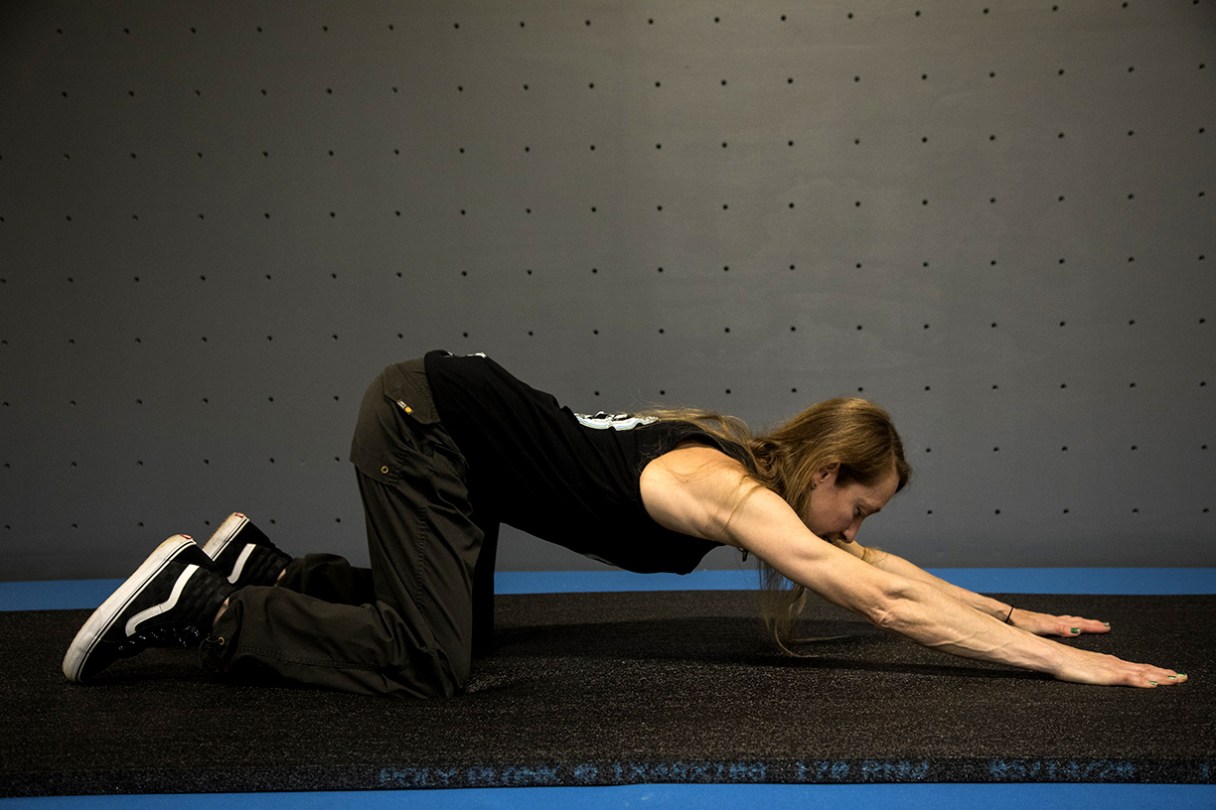

As a professional climber for 30 years and a longtime climbing coach, Lisa Rands has honed a 30-minute routine of stretches and conditioning exercises that help climbers stay healthy and balanced.
Many climbers do exercises that focus on their front and abs, she says, but Rands likes her climbers to work those strengths while climbing. The conditioning exercises she recommends help with technique while focusing on strengthening through the back of the body and opening up the areas that get tight in the front, predominantly the chest and hips.
The most common problems she sees in climbers involve the shoulders, typically a result of not stretching sufficiently or performing pushing exercises to oppose all the pulling the shoulders typically do, she says. Even experienced climbers get imbalanced and start rolling their shoulders in as they pull, causing the pectoralis muscles to tighten and shorten – eventually leading to shoulder pain and possible injury such as rotator cuff tears or dislocation, says Rands.
“If you can practice climbing with good form and working through correct posture, you don’t just target the front of the shoulder, you end up transferring the weight back through other key muscles such as your latissimus dorsi, middle and lower trapezius, and other key muscles in the back and sides such as through the serratus and obliques,” she says. ” … You will overall be able to stay healthier. Plus, you’ll climb harder because you end up recruiting bigger muscles, not just targeting smaller muscles in your shoulder.”
A sign that someone is getting an imbalance, says Rands, is when they develop a big upper trap muscle, which happens because they are recruiting this muscle and neck muscles such as levator scapulae to pull themselves up rather than pulling down and back to transfer their weight into their lats and lower trapezius. Headaches could be another indicator, she says.