
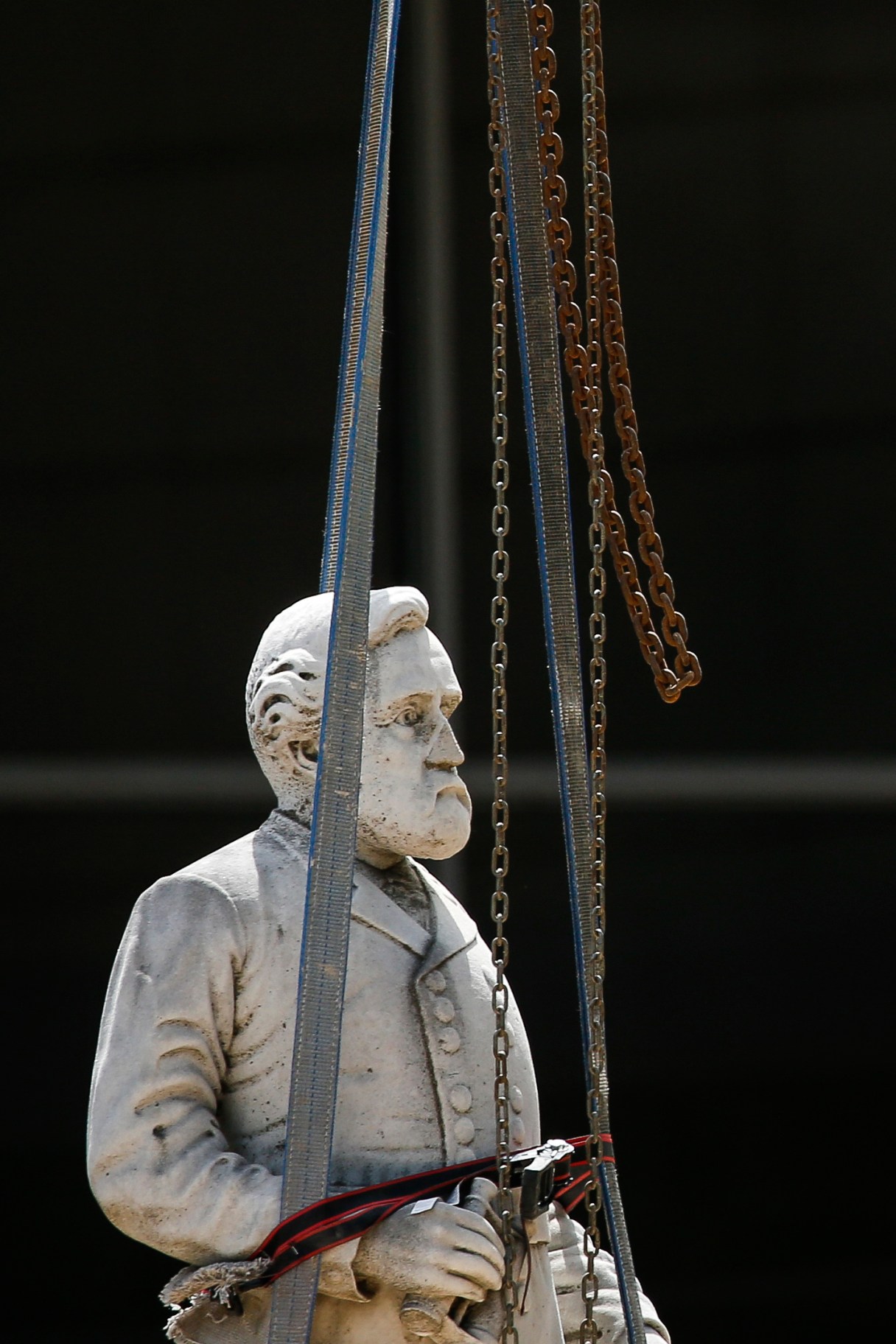
Regarding statues, monuments and other public tributes to those once deemed great – which to do away with and which to keep – four familiar words can guide our choices: a more perfect union.
Did Jefferson Davis or Robert E. Lee fight for a more perfect union? No. They fought for disunion. Outside of museums, gravesites or private collections, there should be no statues of either man, or of their senior confederates.
Likewise, John C. Calhoun believed in slavery as a positive good and nullification as a state’s right. He utterly fails the more perfect union test, which is why Yale was right when in 2017 it rechristened the residential college previously named for him.
Likewise, Forts Bragg, Hood, Benning and seven other military installations named for Confederate generals should be renamed. The Constitution is specific in defining treason narrowly as “levying war” against the United States. It is dangerous for the government to name buildings or facilities for those who betrayed it – and incredible that the fact escaped wide notice until now.
Likewise, we should never honor public figures who, by the standards of their own time as well as ours, abused a public trust. Case in point: The more we learn about J. Edgar Hoover, the more outrageous it is that the FBI building in Washington is still named for him.