
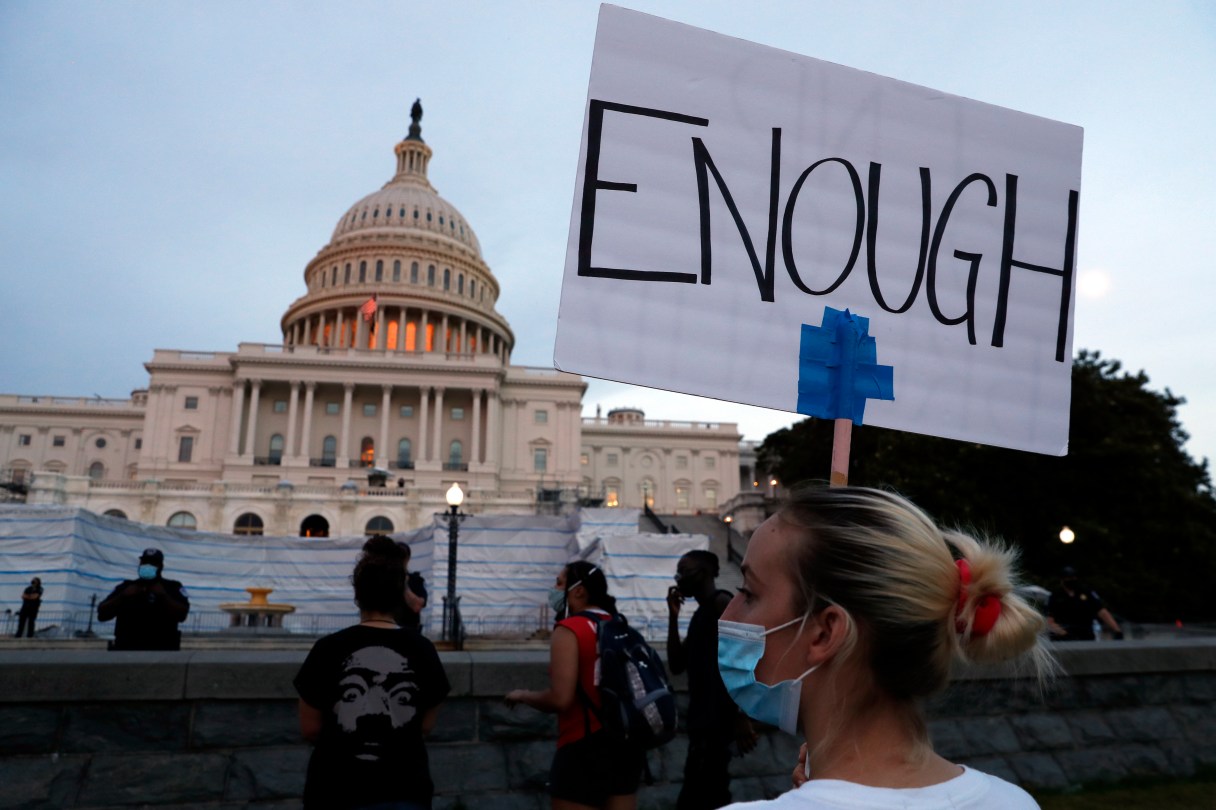
WASHINGTON (AP) – It’s rare for public opinion on social issues to change sharply and swiftly. And yet in the wake of George Floyd’s death, Americans’ opinions about police brutality and racial injustice have moved dramatically.
About half of American adults believe police violence against the public is a “very” or “extremely” serious problem, according to a poll conducted earlier this month by The Associated Press-NORC Center for Public Affairs Research. Only about a third said the same as recently as last September, as well as in July 2015, just a few months after Freddie Gray, a Black man, died in police custody in Baltimore.
Floyd, a Black man, died on May 25 after a white Minneapolis police officer pressed his knee into Floyd’s neck for nearly eight minutes. In the weeks that followed, protests erupted nationwide.
The recent shifts in public opinion stand out when compared with years of survey research conducted following similar slayings of Black people by police. They are distinct from slow and steady movement on other social issues, such as support for same-sex marriage. And there is evidence they may last.
“I think this seems to be something different from the gradual change that we often see with cultural and social issues,” said Jennifer Benz, the deputy director of the AP-NORC Center.