
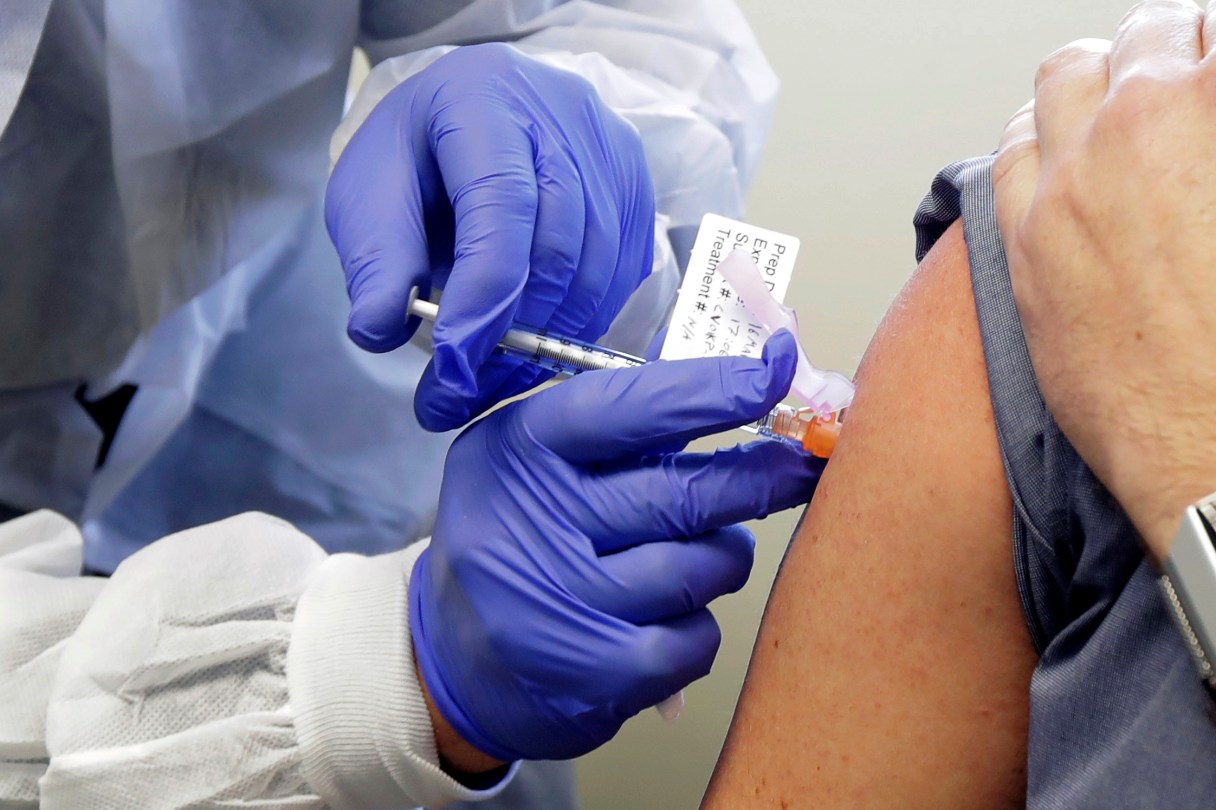
WASHINGTON (AP) – Western governments accused hackers believed to be part of Russian intelligence of trying to steal valuable private information about a coronavirus vaccine on Thursday, calling out the Kremlin in an unusually detailed public warning to scientists and medical companies.
The alleged culprit is a familiar foe. Intelligence agencies in the United States, United Kingdom and Canada alleged that the hacking group APT29, also known as Cozy Bear and blamed for American election interference four years ago, is attacking academic and pharmaceutical research institutions involved in COVID-19 vaccine development.
It was unclear whether any useful information was stolen. But British Foreign Secretary Dominic Raab said, “It is completely unacceptable that the Russian Intelligence Services are targeting those working to combat the coronavirus pandemic.”
He accused Moscow of pursuing “selfish interests with reckless behavior.”
Sticking to more general language, White House press secretary Kayleigh McEnany said, “We worked very closely with our allies to ensure that we would take measures to keep that information safe and we continue do so so.”