
Monday, November 16, 2026Nov 16

Ecuadorian hummingbirds chirp ultrasonic songs of seduction

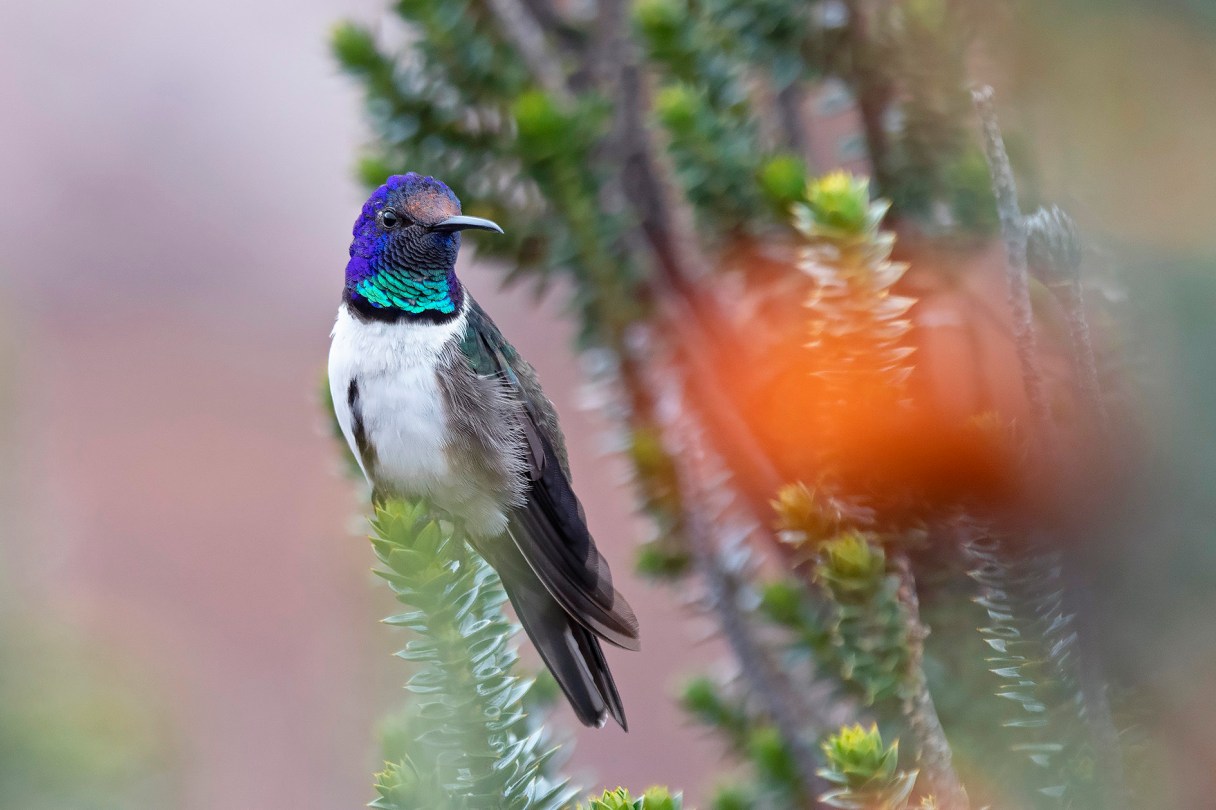
This 2018 photo provided by Paolo David Escobar shows a male Hillstar hummingbird perched on a Chuquiraga jussieui flower in Ecuador. A study released on Friday, July 17, 2020 finds that the species of hummingbirds can sing and hear frequencies beyond the range of other birds. The unusually high-pitched songs may help the birds woo above background noises in their windy, mountain environment. (Paolo David Escobar/Neoselva Photography via AP)

WASHINGTON (AP) – Perched on a flowering shrub on a windy Andean mountainside, the tiny Ecuadorian Hillstar hummingbird chirps songs of seduction that only another bird of its kind can hear.

As the male sings, he inflates his throat, causing iridescent throat feathers to glisten princely purple. The female may join in a courtship dance – or chase him off.

For the first time, scientists have shown that these hummingbirds can sing and hear in pitches beyond the known range of other birds, according to research published Friday in the journal Science Advances.

The male’s ballad is sung at around 13.4 kilohertz. That’s considered “ultrasonic” for birds, which generally can’t hear above 9 or 10 kilohertz.

“Something very interesting is going on in the ears of these hummingbirds to allow them to hear such sounds,” said Christopher Clark, a biologist at the University of California, Riverside, who was not involved in the study.