
Thursday, November 12, 2026Nov 12

Final days of hajj and Eid festival impacted by coronavirus

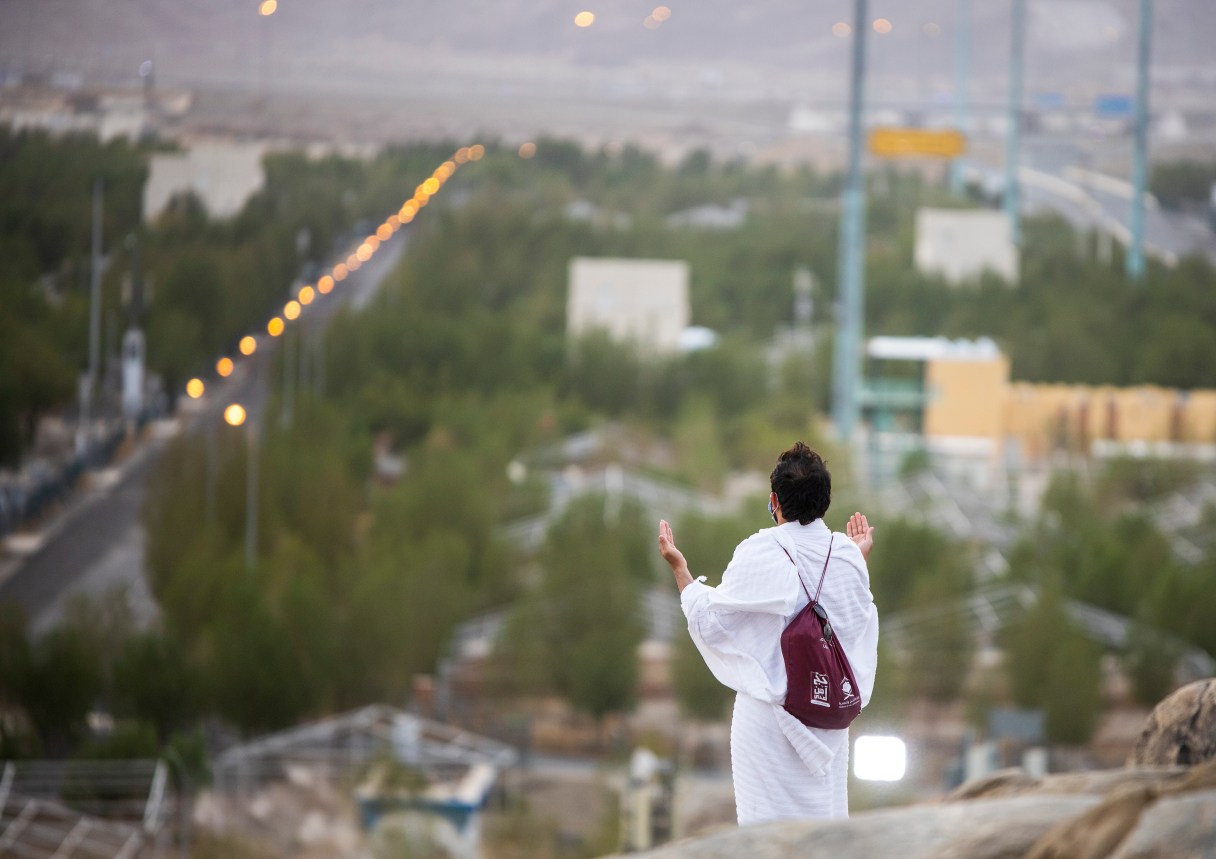
Muslim pilgrims pray on top of the rocky hill known as Mountain of Mercy on the Plain of Arafat during the annual hajj pilgrimage near the holy city of Mecca, Saudi Arabia, Thursday, July 30, 2020. Only about 1,000 pilgrims will be allowed to perform the annual hajj pilgrimage this year due to the virus pandemic. (Saudi Ministry of Media via AP)
Muslim pilgrims pray on top of the rocky hill known as Mountain of Mercy on the Plain of Arafat during the annual hajj pilgrimage near the holy city of Mecca, Saudi Arabia, Thursday, July 30, 2020. Only about 1,000 pilgrims will be allowed to perform the annual hajj pilgrimage this year due to the virus pandemic. (Saudi Ministry of Media via AP) Muslim pilgrims pray on top of the rocky hill known as Mountain of Mercy on the Plain of Arafat during the annual hajj pilgrimage near the holy city of Mecca, Saudi Arabia, Thursday, July 30, 2020. Only about 1,000 pilgrims will be allowed to perform the annual hajj pilgrimage this year due to the virus pandemic. (Saudi Ministry of Media via AP)

DUBAI, United Arab Emirates (AP) – Small groups of pilgrims performed one of the final rites of the Islamic hajj on Friday as Muslims worldwide marked the start of the Eid al-Adha holiday amid a global pandemic that has impacted nearly every aspect of this year’s pilgrimage and celebrations.

The last days of the annual pilgrimage to Mecca in Saudi Arabia coincide with the four-day Eid al-Adha, or “Feast of Sacrifice,” in which Muslims slaughter livestock and distribute the meat to the poor.

The pandemic has pushed millions of people around the world closer to the brink of poverty, making it harder for many to fulfill the religious tradition of purchasing livestock.

In Somalia, the price of meat has slightly increased. Abdishakur Dahir, a civil servant in Mogadishu, said that for the first time he won’t be able to afford goat for Eid because of the impact of the virus on work.

“I could hardly buy food for my family,” Dahir said. “We are just surviving for now. Life is getting tougher by the day.”