
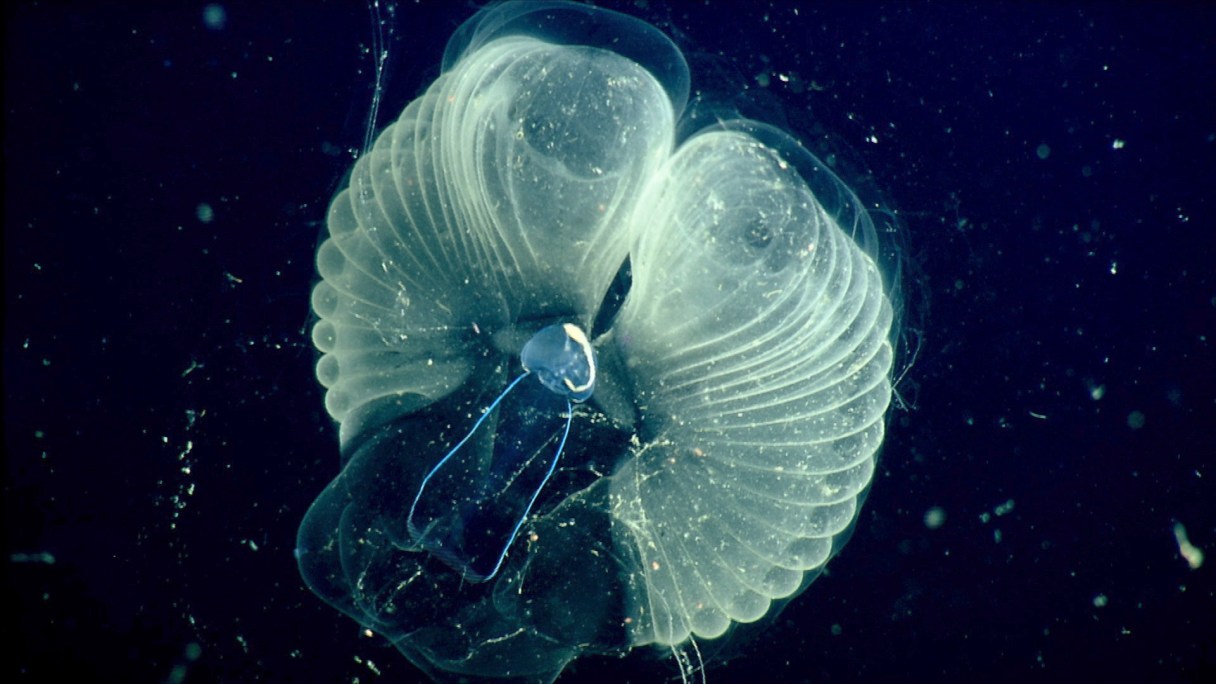
KENSINGTON, Maryland (AP) – Master builders of the sea construct the equivalent of a complex five-story house that protects them from predators and funnels and filters food for them – all from snot coming out of their heads.
And when these delicate mucus homes get clogged, the tadpole-looking critters – called giant larvaceans – build a new one. Usually every day or so.
These so-called “snot palaces” could possibly help human construction if scientists manage to crack the mucus architectural code, said Kakani Katija, a bioengineer at Monterey Bay Aquarium Research Institute.
Her team took a step toward solving the mystery of the snot houses and maybe someday even replicating them, according to a study in Wednesday’s journal Nature.
The creatures inside these houses may be small – the biggest are around 4 inches (10 centimeters) – but they are smart and crucial to Earth’s environment. Found globally, they are the closest relatives to humans without a backbone, Katija and other scientists said.