
Monday, November 16, 2026Nov 16

New York passes bill to unveil police discipline records

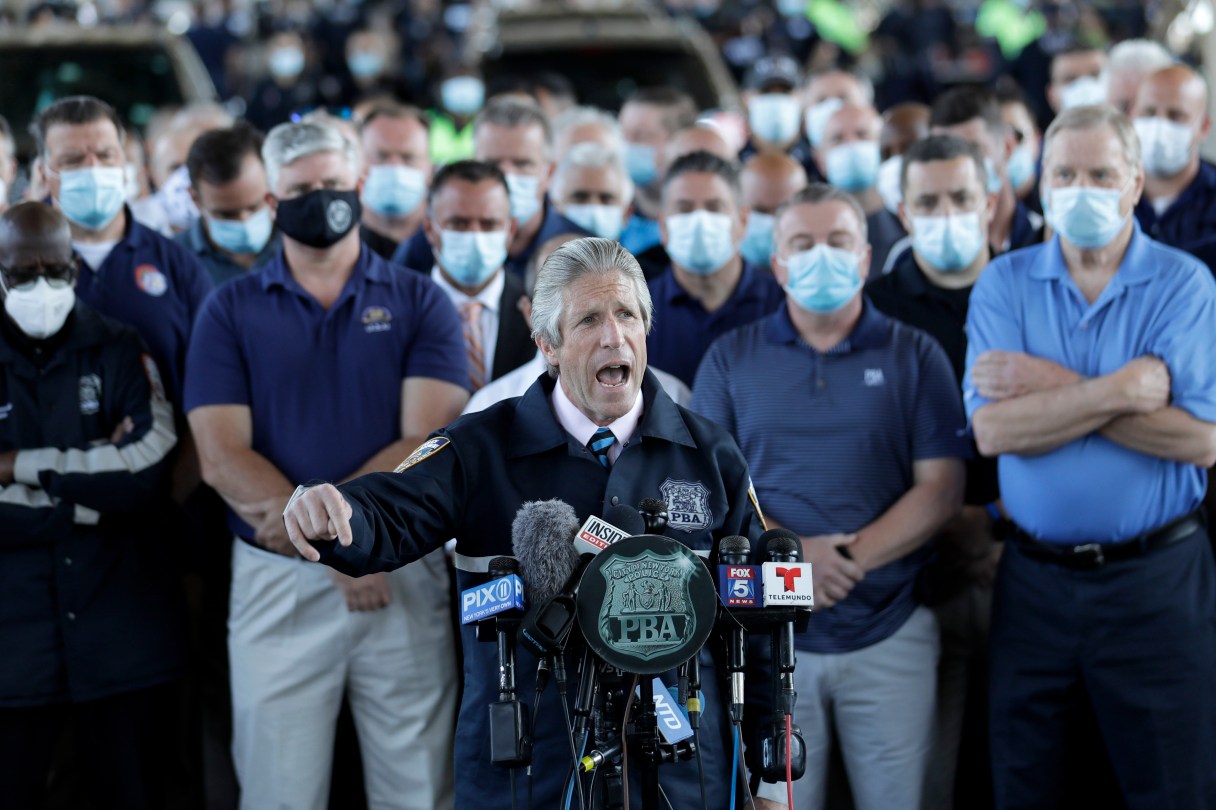
Surrounded by law enforcement and supporters, New York City PBA President Pat Lynch, center, speaks during a news conference in New York, Tuesday, June 9, 2020. A New York City police officer who was caught on video violently shoving a woman to the ground during a protest over the death of George Floyd was charged Tuesday with assault and other counts, prosecutors announced. Lynch said the mayor and police leaders were "sacrificing cops to save their own skin" by sending officers out to protests with "no support and no clear plan." (AP Photo/Seth Wenig)

ALBANY, N.Y. (AP) – New York state lawmakers repealed a decades-old law Tuesday that has kept law enforcement officers’ disciplinary records secret, spurred by the national uproar over the death of George Floyd.

The measure to make officers’ records and misconduct complaints public is among several police accountability bills racing through the state legislature. Lawmakers passed other bills that would provide all state troopers with body cameras and ensure that police officers provide medical and mental health attention to people in custody.

Many of those bills were first proposed years ago, but got new momentum after huge protests nationwide condemned police brutality.

The passage came as criminal charges were brought Tuesday against an NYPD officer over his rough treatment of a protester during demonstrations following the death of Floyd, who pleaded he couldn’t breathe as a white Minneapolis police officer pressed a knee on his neck May 25.

Eliminating the law, known as Section 50-a, would make complaints against officers, as well as transcripts and final dispositions of disciplinary proceedings, public for the first time in decades.