
Friday, November 13, 2026Nov 13

Icons of 1960s civil rights movement voice cautious optimism

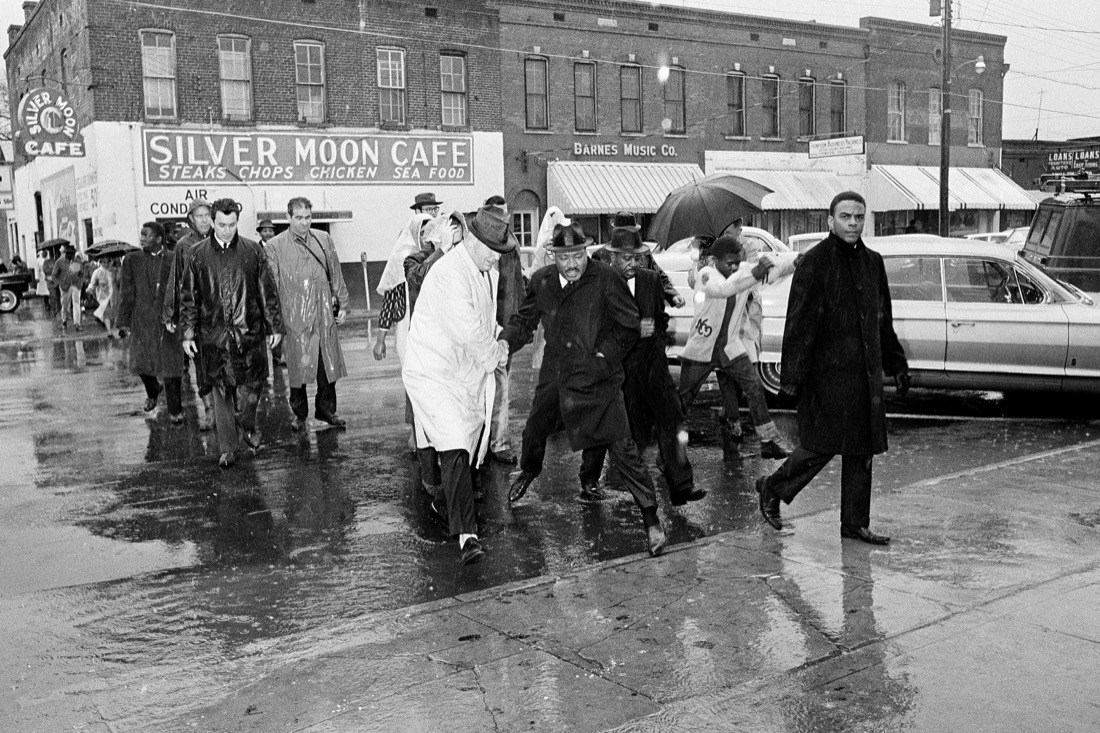
FILE - In this March 1, 1965 file photo Dr. Martin Luther King Jr. hops over a puddle as it rains in Selma, Ala. King led hundreds of African Americans to the court house in a voter registration drive. At front is civil rights worker Andrew Young, and at right, behind King is Rev. Ralph Abernathy. Today's protests across America against racial injustice are being watched closely by people who five decades ago faced jail cells, bloody assaults, snarling dogs and even potential assassination in the battle against institutional racism. Young, a King lieutenant, marvels at both the sizes and the spontaneity of the protests. The former Democratic congressman, Atlanta mayor and United Nations ambassador recalled activists spending three months to organize for a 1963 Birmingham, Alabama, campaign in which King and other protesters were jailed. (AP Photo, File)

CINCINNATI (AP) – Bob Moses says America is at “a lurching moment” for racial change, potentially as transforming as the Civil War era and as the 1960s civil rights movement that he helped lead.

“What we are experiencing now as a nation has only happened a couple times in our history,” said Moses, a main organizer of the 1964 “Freedom Summer” project in Mississippi. “These are moments when the whole nation is lurching, and it’s not quite sure which way it’s going to lurch.”

Moses, now 85 and still active with The Algebra Project he founded, was among the many people, Black and white, who risked jail time, assaults and even assassination in the battles against racial segregation and for voting rights in the South. Associated Press reporters asked some of the leaders their thoughts on the current protests across the country sparked by police slayings of Black men in Minneapolis and Atlanta.

“We have kind of the perfect storm,” said the Rev. Jesse L. Jackson, a close aide to the slain Dr. Martin Luther King Jr. and leader of the Chicago-based Rainbow PUSH Coalition, an organization that fights for social change. “You’ve got COVID-19, you’ve got ‘Code Blue’ – police brutality – you have poverty, and you have Trump.”

Studies show that Black people have suffered disproportionately from the coronavirus, the resulting economic downturn and at the hands of police, and polls show most are opposed to President Donald Trump, a Republican. Jackson noted, though, it’s not just Black people taking to the streets in large numbers.