
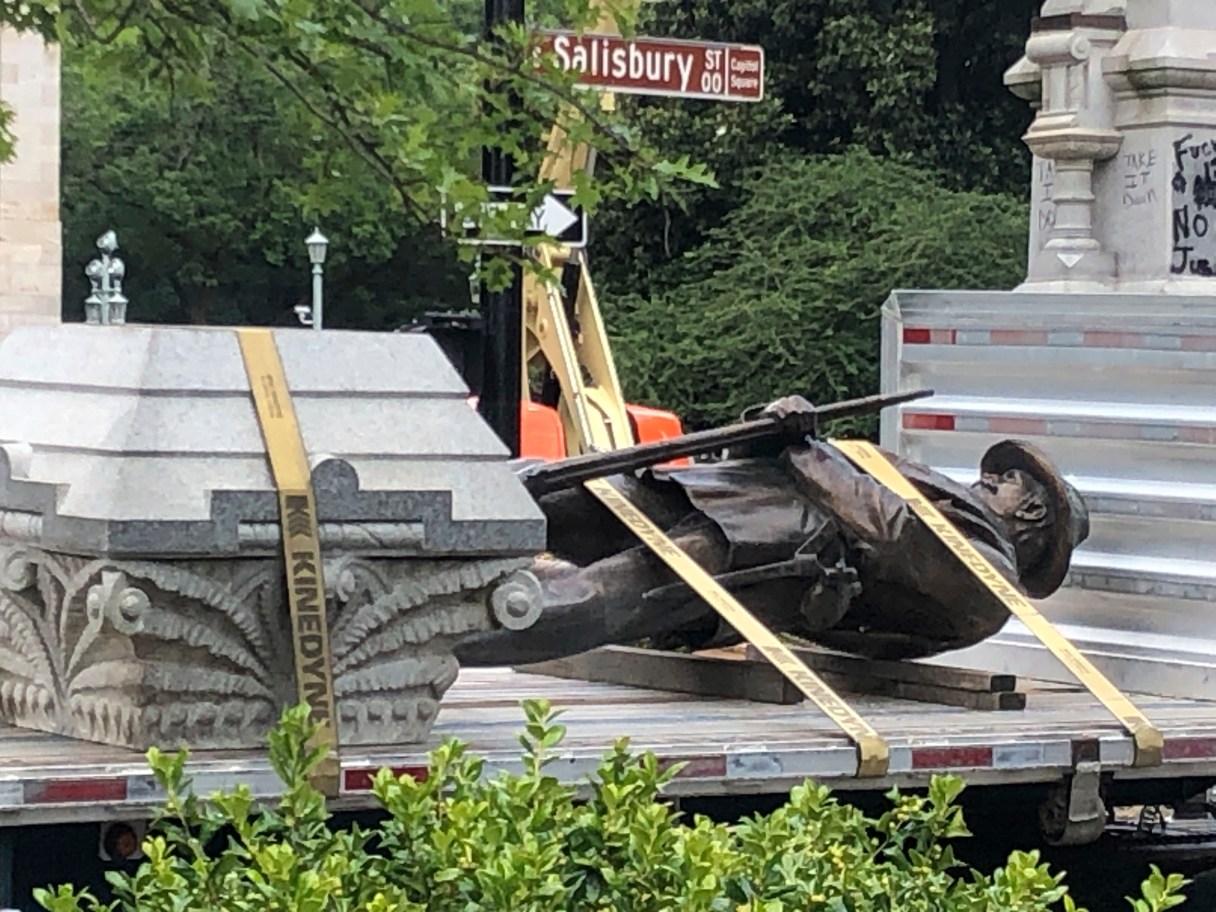

During an episode of the current television rebroadcast of the 2013-2014 C-SPAN series “First Ladies: Influence and Image” last week, the discussion about Julia Grant – wife of President Ulysses S. Grant – unwittingly touched on history’s judge of an individual that is being played out today in the destruction of statues and monuments across the country.
The exchange on Grant centered on how her family owned slaves and her husband’s family were avowed abolitionists and how the future president was once given a slave by his father-in-law. Grant did not immediately set him free but used him for a time in service to their young family.
Grant was the general who decisively turned the tide of the Civil War toward the Union with victories at Shiloh, Vicksburg and Chattanooga and in 1864 was given command of all Union armies. He accepted the surrender of Confederate Gen. Robert E. Lee’s Army of Northern Virginia at Appomattox Courthouse in Virginia in 1865 and in 1868 was elected the 18th president of the United States.
As president, he enforced Reconstruction, backed the 15th Amendment that prohibited the federal government and states from denying anyone the right to vote based on their race, oversaw the passage of laws to allow Black people to serve on juries and hold office, and saw to it that his Justice Department collapsed the Ku Klux Klan.
And yet, the mobs of today, at least those who have any sense of history, would say, “… But he was a slaveholder.”