
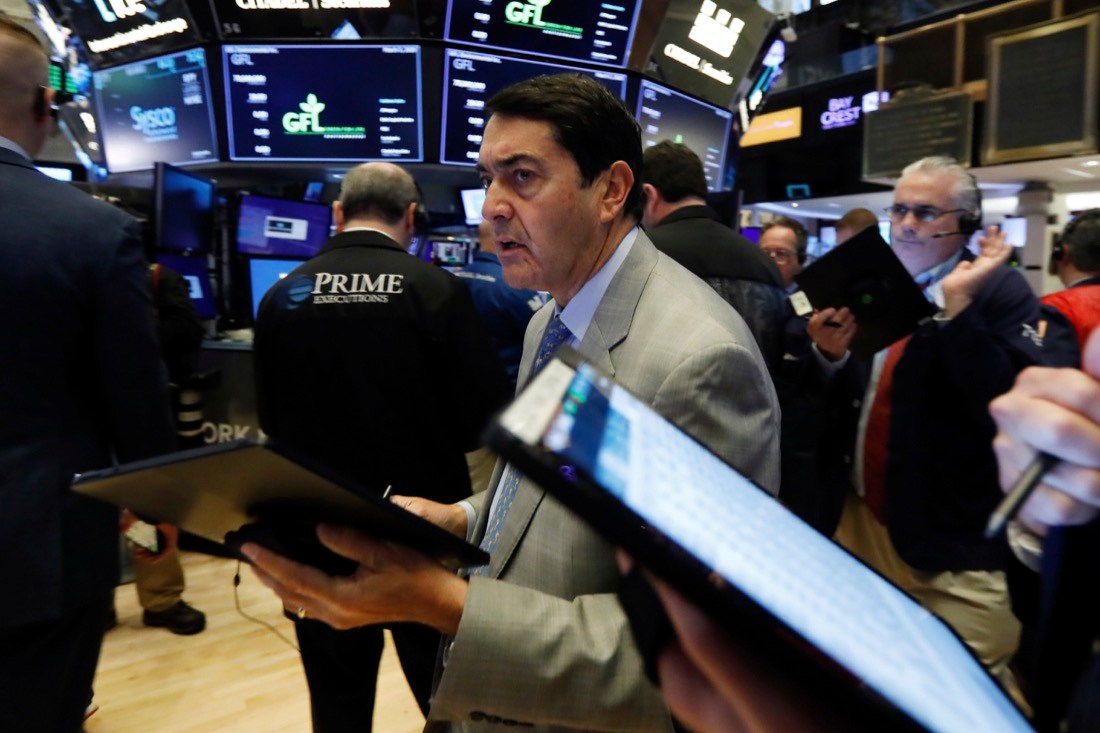
NEW YORK (AP) – Stocks are falling sharply on Wall Street Tuesday after an emergency interest-rate cut by the Federal Reserve failed to wipe out fears that a fast-spreading virus outbreak could lead to a recession.
Major indexes were down more than 3% in afternoon trading, bringing the Dow Jones Industrial Average down more than 800 points.
It took just 15 minutes for an early rally to evaporate following the Fed’s surprise move. While the cut helped raise confidence for some investors, traders were still debating how effective a rate cut can be on what is ultimately a health crisis. Some investors are also questioning whether more aid is on the way to stabilize the market, while others called the Fed’s move premature to begin with. For more than a few, the Fed’s steepest rate cut since 2008 recalled the dark days of the financial crisis.
After popping to a 1.5% gain shortly after the Fed’s announcement, the S&P 500 swung between modest gains and losses for about an hour before turning decisively lower in the late morning. The index was down 3.2%, as of 2:11 p.m. Eastern time, and on pace for its eighth drop in the last nine days. Other indexes had similar, jagged moves.
Everything from bonds to a gauge of traders’ fear of large stock moves swung sharply following the Fed’s cut, and the yield on the 10-year Treasury fell below 1.00% for the first time in history. Markets have been on edge for nearly two weeks, as the virus spreads beyond China and companies across continents and industries say they expect it to hit their profits.