
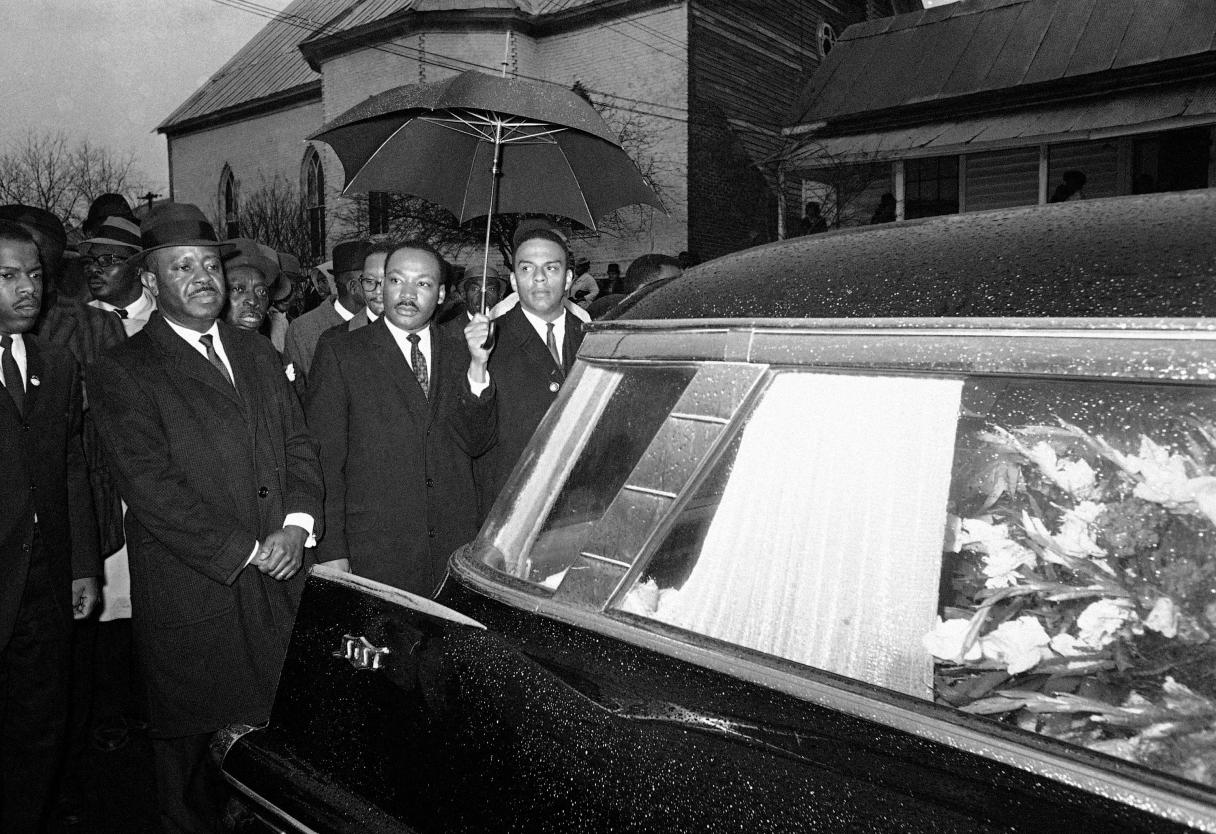
MARION, Ala. – Della Simpson Maynor remembers the mounted police officer cracking her elbow with a baton. She recalls the panicked marchers unable to escape the onslaught, and the scuffle between officers and a young church deacon who was trying to protect his mother and grandfather. Most of all, she remembers the gunshot.
Two weeks before Bloody Sunday – the clash in Selma on March 7, 1965, that helped propel passage of the Voting Rights Act of 1965 – there was a march in this small town 30 miles away.
What happened in Marion is now a less-familiar episode in the civil rights movement, a footnote in the textbooks. But the blood spilled here would send hundreds of people from Marion and the surrounding county to Selma and the Edmund Pettus Bridge, where history was made.
“Starting the story in Selma is like reading a book by starting in the middle and not going back to the beginning so you can get the total picture of what actually happened in 1965,” said Perry County Commissioner Alfred Turner Jr. “Without the events occurring in Marion, there’s no way you would have gotten the same results or the optics of Bloody Sunday.”
The protest in Marion was sparked by the arrest of a minister who was leading efforts to register black people to vote. It ended with the fatal shooting of a 26-year-old black church deacon, Jimmie Lee Jackson, by a state trooper.