
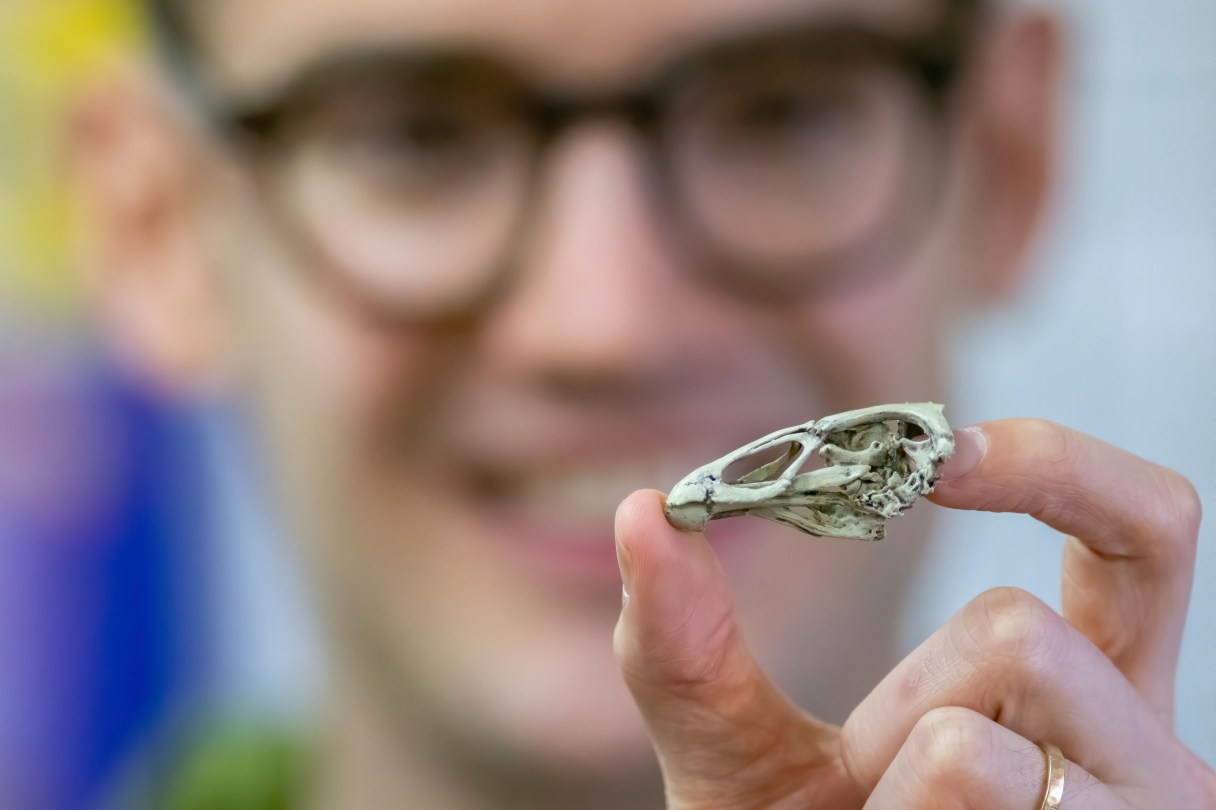
NEW YORK (AP) – A tiny fossil skull nicknamed “Wonderchicken” is giving scientists a rare glimpse at early ancestors of today’s birds. It may be the oldest known fossil from this group.
With a face like those of today’s chicken-like birds and a back portion like that of living duck-like birds, Wonderchicken is ” down near the bottom of the modern-bird family tree,” said Daniel Field of Cambridge University.
He and others announced the find in a report released Wednesday by the journal Nature. They named the creature Asteriornis maastrichtensis, but let’s stick with Wonderchicken.
Found in Belgium, it is some 66.7 to 66.8 million years old. A previously reported Antarctic fossil find is about as old, but its precise age and place on the evolutionary tree are not clear. Field said the Belgian skull is slightly older.
It appeared as a block of broken rocks with some broken leg bones sticking out. After it was donated to a museum, Field tried CT scanning to get a better look at those bones. To his astonishment, the scanning revealed a well preserved skull inside the rock “staring out of the computer screen right at us.”