
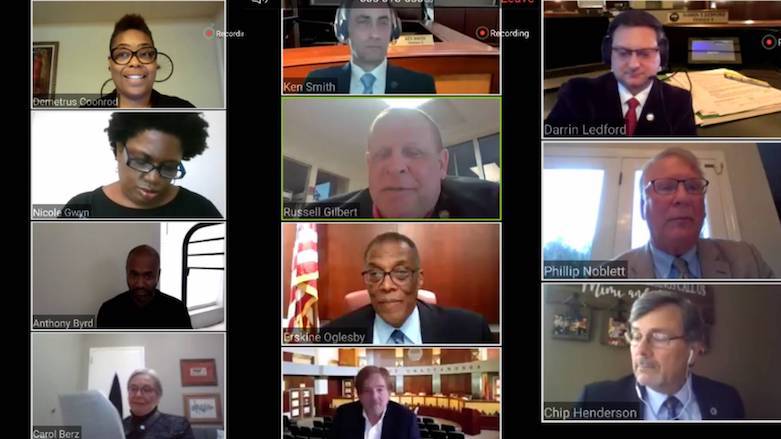
The Chattanooga City Council’s first virtual meeting amid social distancing highlighted some of the perils of online public meetings as online attendees used racist hate speech in the chat and council members debated transparency protocols amid the COVID-19 public health crisis.
The two-hour meeting addressed several regular business and state-of-emergency topics with limited technical hurdles, but stumbled early on as three people in an online chat sent dozens of racist messages targeting black council and staff members.
In the span of the first 10 minutes, more than two dozen messages reading “I HATE N –” and similar messaging flooded the public chat with more than 90 uses of the racial slur.
Multiple council members responded with shock, imploring that someone curb the “extremely offensive” messages that were visible to the more than 80 online viewers of the meeting as well as the council members and city staff.
“It was an unfortunate part of the meeting, and we had to figure out what exactly to do when they were coming in,” said District 3 Councilman Ken Smith, who steered the council’s use of the video conferencing app Zoom. “When those kinds of comments were coming through, those people were just removed from the meeting. But the thing about Zoom is you can’t prevent people from joining, nor would I ever advocate for us keeping people out of the conversation, so we’re going to have to figure out the best options for preventing this.”