
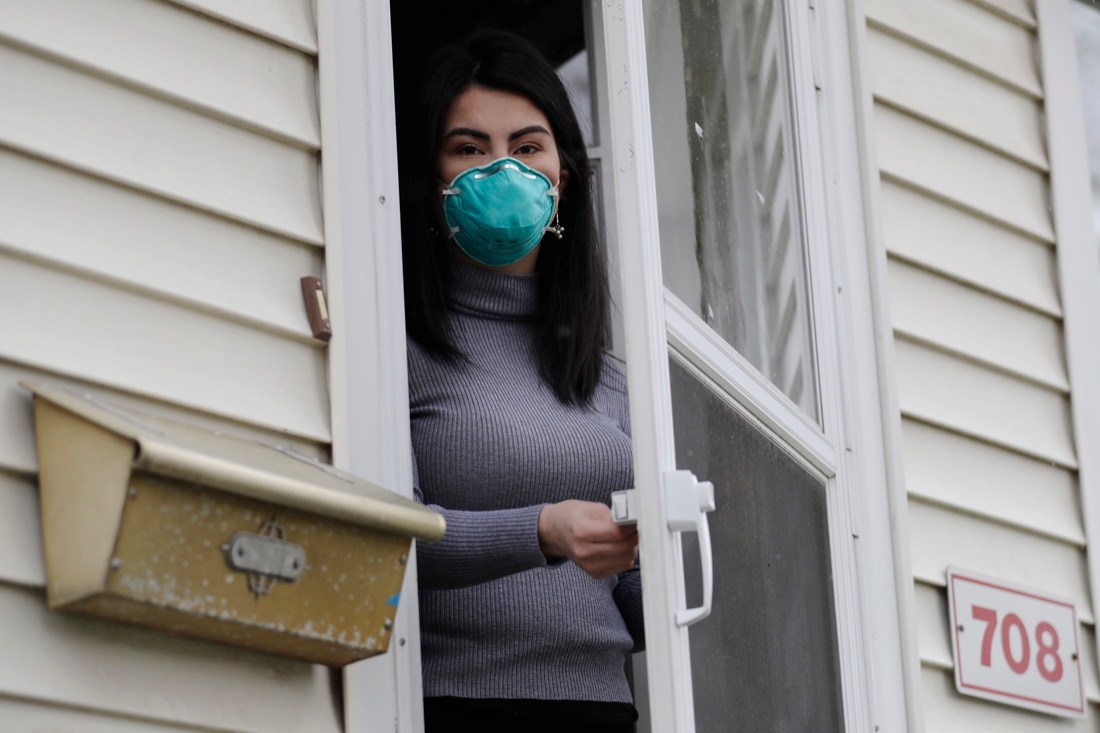
CHICAGO (AP) – At the age of 24, Francy Sandoval has unwittingly become the sole breadwinner for her family, after her mom, dad and brother – a nanny, a painter and a server – all lost their jobs in the coronavirus pandemic.
Her family needs the money, so the aspiring nurse feels she has no choice but to keep her high-risk job at the front desk of a suburban Chicago community health clinic treating many COVID-19 patients. But her home hardly feels like a haven either.
“Working during this time is not as stressful as coming home,” she said. “You were surrounded with patients who could have been or are positive and you might get your parents sick by just opening the door.”
Sandoval, an immigrant from Colombia, is among tens of millions of Americans living in multigenerational homes where one of the main strategies for avoiding infection – following social distancing protocols – can be near impossible.
The problem reverberates deepest in communities of color, where families from different generations live together at much higher rates, in some cases nearly double that of white families. Joint living also often intersects with factors like poverty, health issues and jobs that can’t be done from home, offering another glimpse of what fuels the troubling racial disparities of COVID-19.