
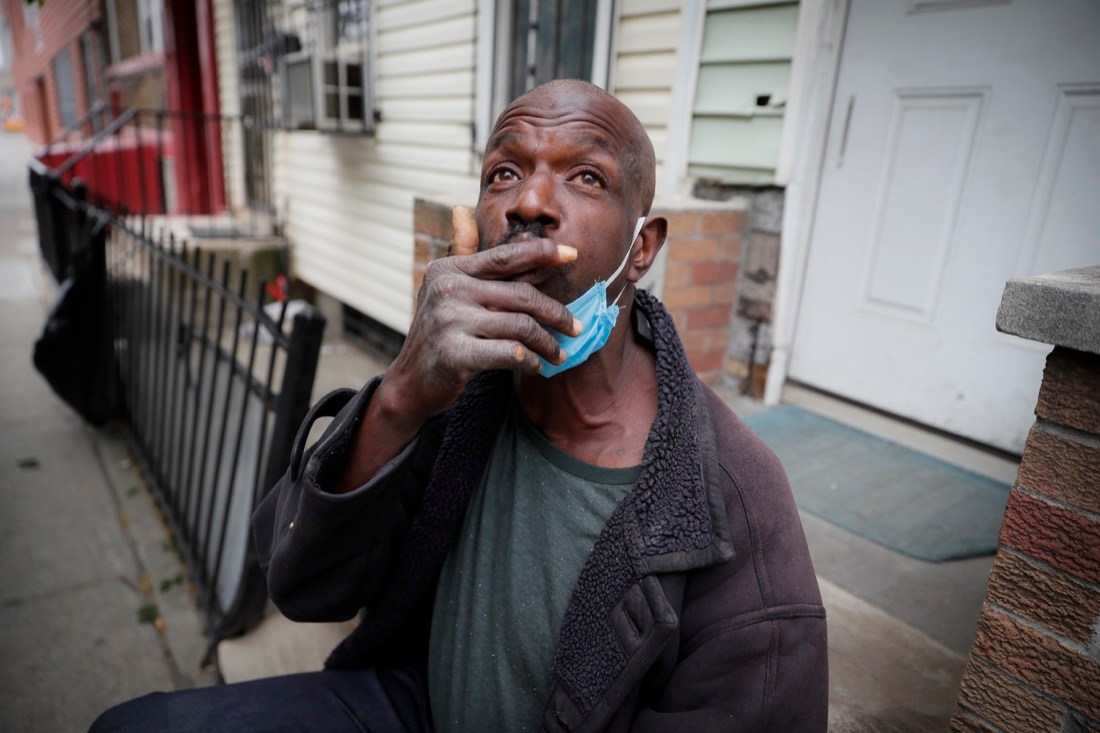
NEW YORK (AP) – More than three weeks after Brandon Bell stopped showing up at a New York office that serves people with schizophrenia, employees finally located him at a nearby homeless shelter.
The office remains open, but patients aren’t stopping by as much during the pandemic. Group activities such as the weekly Caribbean lunch that were also an important source of food have ended because of the coronavirus. Visits from caregivers are less frequent and shorter – usually five or 10 minutes – to reduce the risk of infection.
When a caregiver recently checked on him, Bell noted that life before the pandemic was happier and “more social.”
His experience highlights the challenges for providers and patients as the pandemic strains the nation’s mental health care system. Even before COVID-19, access to mental health services in the U.S. could be difficult, including for people who have insurance. Now experts fear the virus will make the situation worse, putting the patients most in need at risk of falling through the cracks and inflicting on countless others newfound grief, anxiety and depression.
Already, social-distancing orders are affecting access to treatment across income levels as therapists and patients scramble to adjust. Medicare and Medicaid have relaxed rules to allow counseling by phone, FaceTime or other remote means. But many of the elderly and poor who rely on those plans aren’t comfortable with the alternatives. Some do not have phones or access to the internet.