
Friday, October 30, 2026Oct 30

This story is free to read.

Hanson: The spread of the debt virus

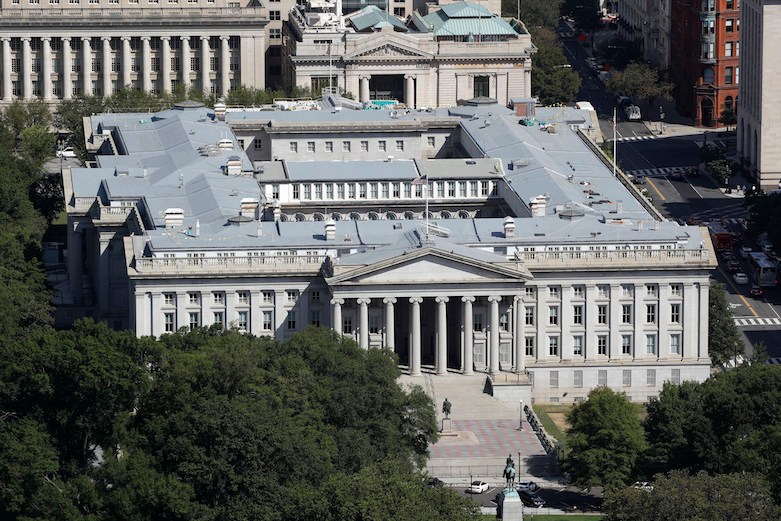
This Sept. 18, 2019 photo shows the U.S. Treasury Department building viewed from the Washington Monument in Washington. The Treasury Department says it will need to borrow a record $2.99 trillion during the current April-June quarter to cover the cost of various rescue efforts dealing with the coronavirus pandemic. Treasury said Monday, May 4, 2020 that the $2.99 trillion it plans to borrow this quarter will far surpass the $530 billion quarterly borrowing it did in the July-September 2008 quarter as it dealt with the 2008 financial crisis. The extraordinary sum of $2.99 trillion of borrowing in a single quarter dwarfs the $1.28 trillion the government borrowed in the bond market for all of 2019. (AP Photo/Patrick Semansky)
This Sept. 18, 2019 photo shows the U.S. Treasury Department building viewed from the Washington Monument in Washington. The Treasury Department says it will need to borrow a record $2.99 trillion during the current April-June quarter to cover the cost of various rescue efforts dealing with the coronavirus pandemic. Treasury said Monday, May 4, 2020 that the $2.99 trillion it plans to borrow this quarter will far surpass the $530 billion quarterly borrowing it did in the July-September 2008 quarter as it dealt with the 2008 financial crisis. The extraordinary sum of $2.99 trillion of borrowing in a single quarter dwarfs the $1.28 trillion the government borrowed in the bond market for all of 2019. (AP Photo/Patrick Semansky) This Sept. 18, 2019 photo shows the U.S. Treasury Department building viewed from the Washington Monument in Washington. The Treasury Department says it will need to borrow a record $2.99 trillion during the current April-June quarter to cover the cost of various rescue efforts dealing with the coronavirus pandemic. Treasury said Monday, May 4, 2020 that the $2.99 trillion it plans to borrow this quarter will far surpass the $530 billion quarterly borrowing it did in the July-September 2008 quarter as it dealt with the 2008 financial crisis. The extraordinary sum of $2.99 trillion of borrowing in a single quarter dwarfs the $1.28 trillion the government borrowed in the bond market for all of 2019. (AP Photo/Patrick Semansky)

The current U.S. budget deficit could soon exceed a record $4 trillion. The massive borrowing is being driven both by previous budget profligacy and a hurried effort by the Trump administration to pump liquidity into a quarantined America.

The shutdown has left the country on the cusp of a self-inflicted economic collapse not seen since the Great Depression.

Americans may soon have to service a staggering national debt of about $30 trillion – nearly $100,000 of debt for every American.

Democrats and Republicans can blame each other, either for spending too much or for too little taxation, or both. But both sides will agree that managing such an astronomical debt requires several frightening choices.

One, Americans would be forced to live with permanent near-zero interest rates, or perhaps even negative interest rates.