
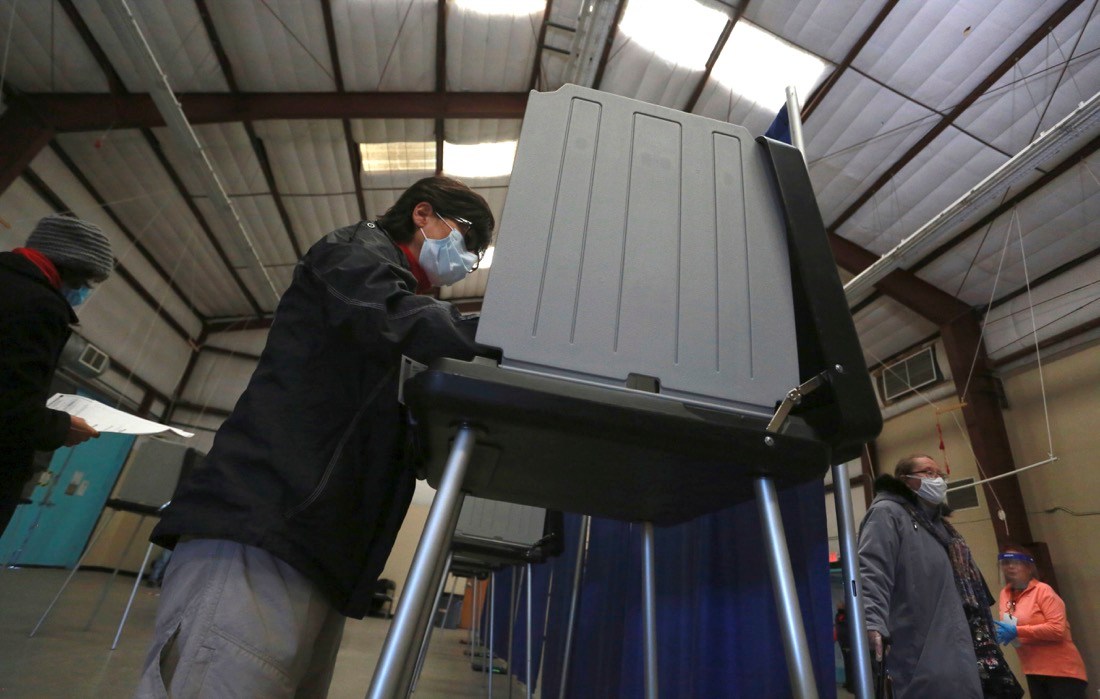
As early voting breaks records across the U.S., political analysts and campaigns are reviewing reams of data on the voters, looking for clues to key questions: Who is voting? And who is winning?
On one level, the answers can be simple. Registered Democrats are outpacing registered Republicans significantly – by 14 percentage points – in states that are reporting voters’ party affiliation, according to an Associated Press analysis of the early vote.
But that doesn’t tell the whole story. Many Americans’ choices don’t align with their party registration. Meanwhile, polls show Republicans have heeded President Donald Trump’s baseless warnings about mail voting, and large numbers intend to vote on Election Day. That means the early Democratic surge could give way to a Republican surge on Tuesday.
The picture is further clouded by the unprecedented nature of how Americans are voting. While Democrats are hungry for signs that key parts of their coalition – young voters, Black voters, new voters – are engaged, comparisons to 2016 are difficult.
Here’s a closer look at what we know – and don’t know – about early voters: