
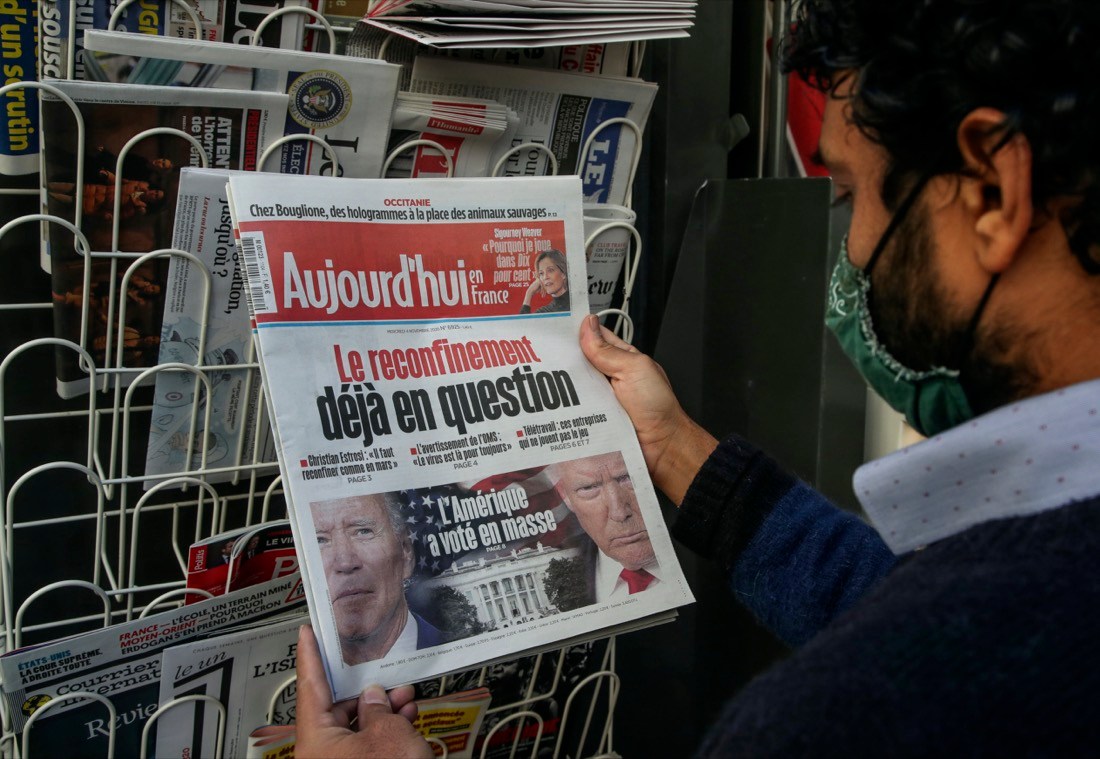
From Ford Model T cars that popped off the assembly line in just 90 minutes to 60-second service for burgers, the United States has long had a major hand in making the world a frenetic and impatient place, primed and hungry for instant gratification.
So waking up to the news Wednesday that the winner of the U.S. election might not be known for hours, days or longer – pundits filled global airwaves with their best bets – was jarring for a planet weaned on American speediness.
Without an immediate result, the guessing game of trying to figure out whether – and how -President Donald Trump or challenger Joe Biden would end up in the White House quickly turned global.
Government leaders scrambled to digest the delay and ordinary people swapped views, hopes and fears on feeds and phones. Some scratched their heads – not for the first time – over the fact that a U.S. president need not win the most votes overall but rather must hit the magic number of 270 votes in the Electoral College.
There was gloating from parts of the world that have previously been on the receiving end of U.S. criticism about their elections and governance. Underscoring how the drama captured global audiences, television graphics in Japan used fireballs to denote some of the battleground states crucial to the outcome.