
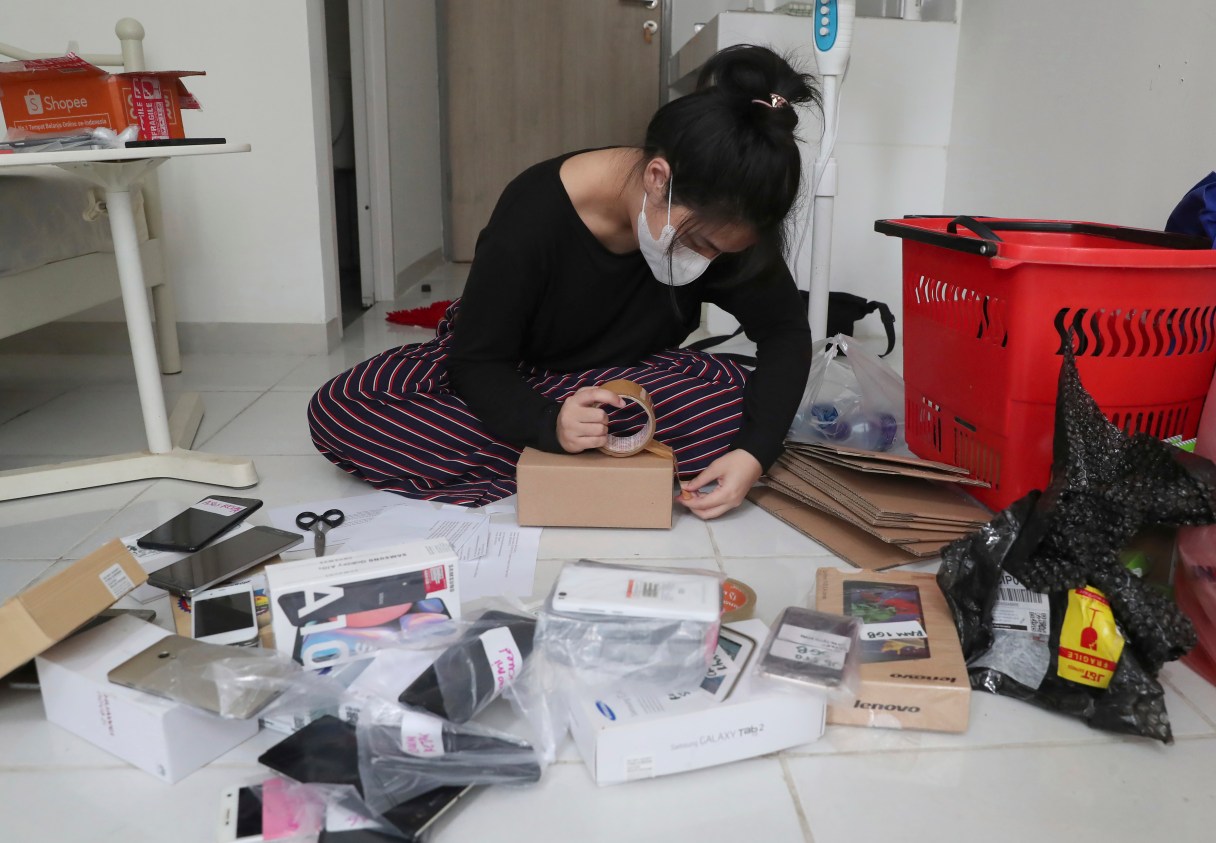
JAKARTA, Indonesia (AP) – When a garbage collector came to Ghina Ghaliya’s house in the Indonesian capital and asked if she had an old mobile phone his children could use to access the internet, it sparked an idea for a broader campaign to help students stuck at home by the coronavirus.
“He said it does not matter if it is the ugly one, as long as his children can use it for learning from home,” said Ghaliya, a journalist at a national newspaper. “I thought there must be many people who need second hand mobile phones out there.”
Shortly after the pandemic hit Indonesia, Ghaliya and 11 other journalists in Jakarta organized a group to provide food and money to people in need. They started hearing from parents who wanted their children to be able to study online but lacked a way to access the internet.
Ghaliya was reminded of her conversation with the garbage collector and she and the other journalists decided to shift their focus to providing mobile phones for underprivileged students, many of whom were still not allowed to do face-to-face learning when the new school year started in July.
They announced their campaign through social media and the response was overwhelming, with people donating second-hand units and others giving cash.