
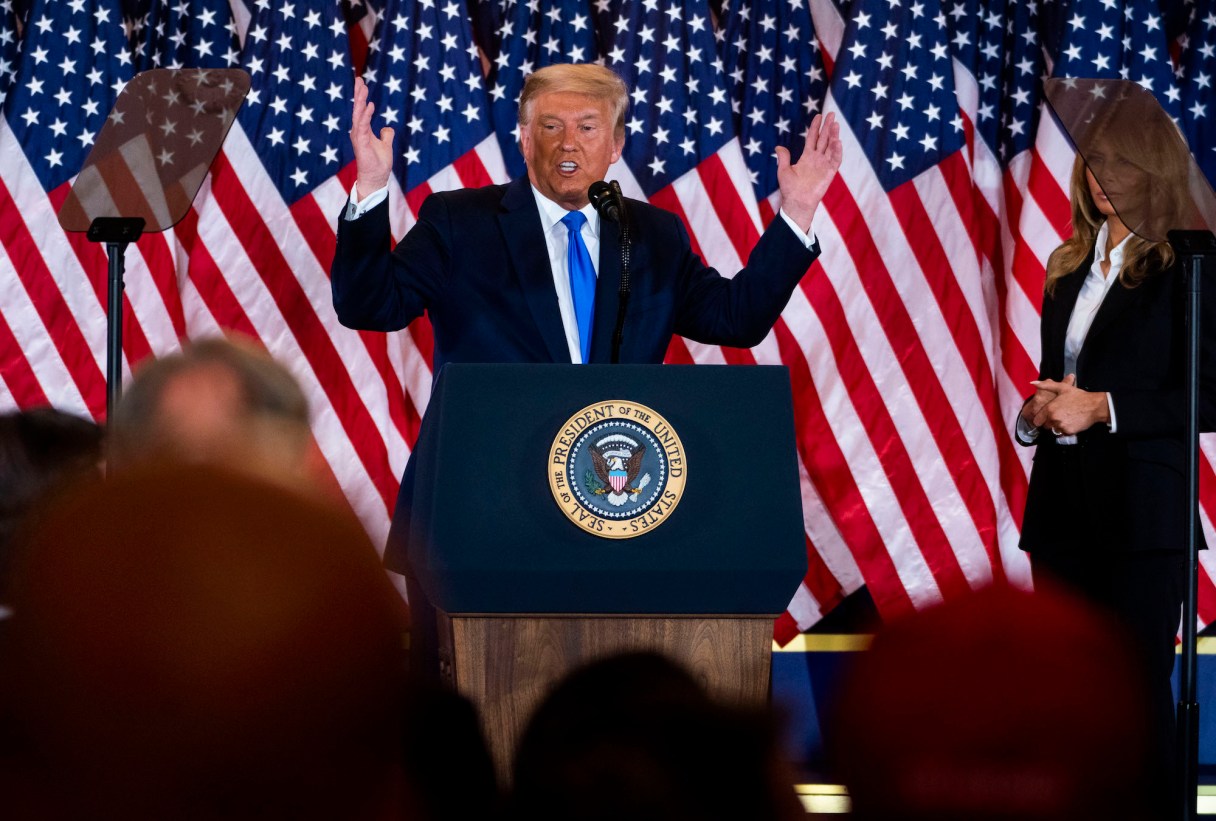
Donald Trump is the luckiest man alive. Unlike almost, well, everyone, he’s been protected from the consequences of his own mistakes his entire life.
Born into a wealthy family, he was insulated from lukewarm academic prospects and serial business crack-ups by his father’s money. Emerging as a reality-TV star in the early 2000s, Trump discovered that fame allowed him to be as predatory as he pleased without repercussions. And his 2016 ascent to the White House opened his eyes to the presidency’s legal armor – which he interpreted broadly and often inaccurately.
Although Trump has over the years juggled, among other difficulties, ho-hum grades, the threat of personal bankruptcy, sexual assault accusations, an intensive federal investigation and an impeachment, he has plowed ahead relatively unwounded and unencumbered by regret. Wealth, celebrity and the presidency have kept him buoyant. All that insulation has also meant that he hasn’t learned from his mistakes. Every personal and public reckoning has been postponed or shunted aside.
Now, however, Trump is staring at two threats that loom after he leaves the White House in January. One is financial, the other legal. Neither is entirely under his control. And both may help explain, along with his perennial inability to accept losing, why Trump won’t acknowledge that President-elect Joe Biden is going to succeed him and why he has enlisted the Republican Party to help him gaslight Americans about the outcome of the presidential election.
Trump and the patchwork of businesses he houses inside the Trump Organization are saddled with more than $1 billion in debt. He is on the hook for a lot of money that he may have to scramble to repay in a COVID-19-battered economy in which his industries – hotels, leisure, urban real estate – have been particularly pummeled. Much of what Trump holds isn’t liquid, meaning he may be hard-pressed to sell assets quickly if he needs to raise funds.