
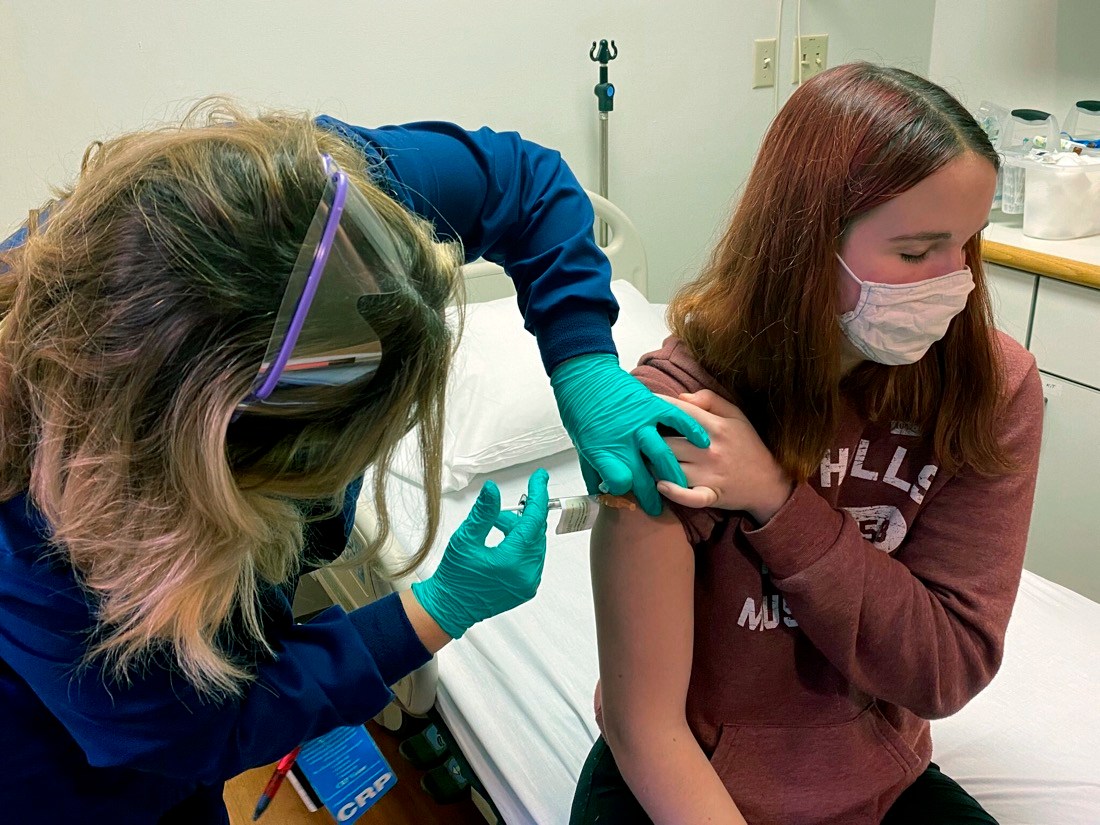
NASHVILLE, Tenn. (AP) – The head of the Nashville’s Meharry Medical college, the oldest historically Black medical school in the country, on Thursday urged Black and Hispanic people to participate in COVID-19 vaccine trials to ensure the treatments are effective in communities that have been hit the hardest by the virus.
At the same time, Dr. James Hildreth – Meharry’s president and CEO -acknowledged that minority populations have at times been used as “guinea pigs” in medical research, adding overcoming that hesitation of new medical treatments remains a battle today.
Meharry pointed to the so-called “Tuskegee Syphilis Study,” where the federal government let hundreds of black men in rural Alabama go untreated for syphilis for 40 years for research purposes.
Roughly 600 Alabama Black men, who were mostly poor and uneducated, participated in the study that started in 1932. An estimated 200 were allowed to suffer the disease without treatment even though penicillin had been discovered as a cure for syphilis while the study was ongoing.
Medical officials say the chilling effects of the study linger to this day, where it’s regularly cited as a reason some Black people are reluctant to participate in medical research, or even go to the doctor for routine check-ups.