
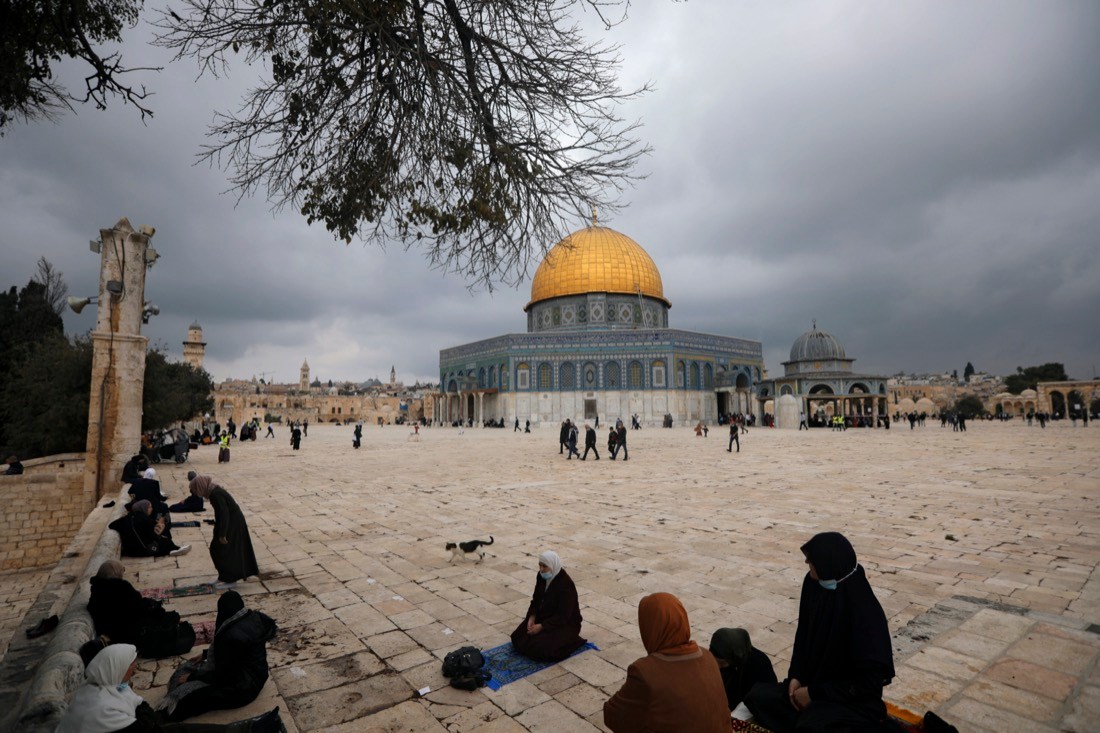
JERUSALEM (AP) – When the United Arab Emirates agreed to normalize relations with Israel, the Palestinians decried the move as a “betrayal” of both Jerusalem, where they hope to establish the capital of their future state, and the Al-Aqsa mosque compound, the city’s holiest Muslim site.
But with Israel now courting wealthy Gulf tourists and establishing new air links to the major travel hubs of Dubai and Abu Dhabi, Palestinians in east Jerusalem could soon see a tourism boon after months in which the coronavirus transformed the Holy City into a ghost town.
“There will be some benefits for the Palestinian sector of tourism, and this is what I’m hoping for,” said Sami Abu-Dayyeh, a Palestinian businessman in east Jerusalem who owns four hotels and a tourism agency. “Forget about politics, we have to survive.”
Palestinian leaders have sharply rejected the recent decisions by the UAE, Bahrain and Sudan to establish ties with Israel because they severely weakened a longstanding Arab consensus that recognition only be extended in return for Palestinian statehood.
The Palestinians hope to establish a state including east Jerusalem and the West Bank, territories occupied by Israel in the 1967 war. Arab support, seen as a key form of leverage in decades of on-again, off-again peace negotiations, now appears to be evaporating, leaving the Palestinians arguably weaker and more isolated than at any point in recent history.