
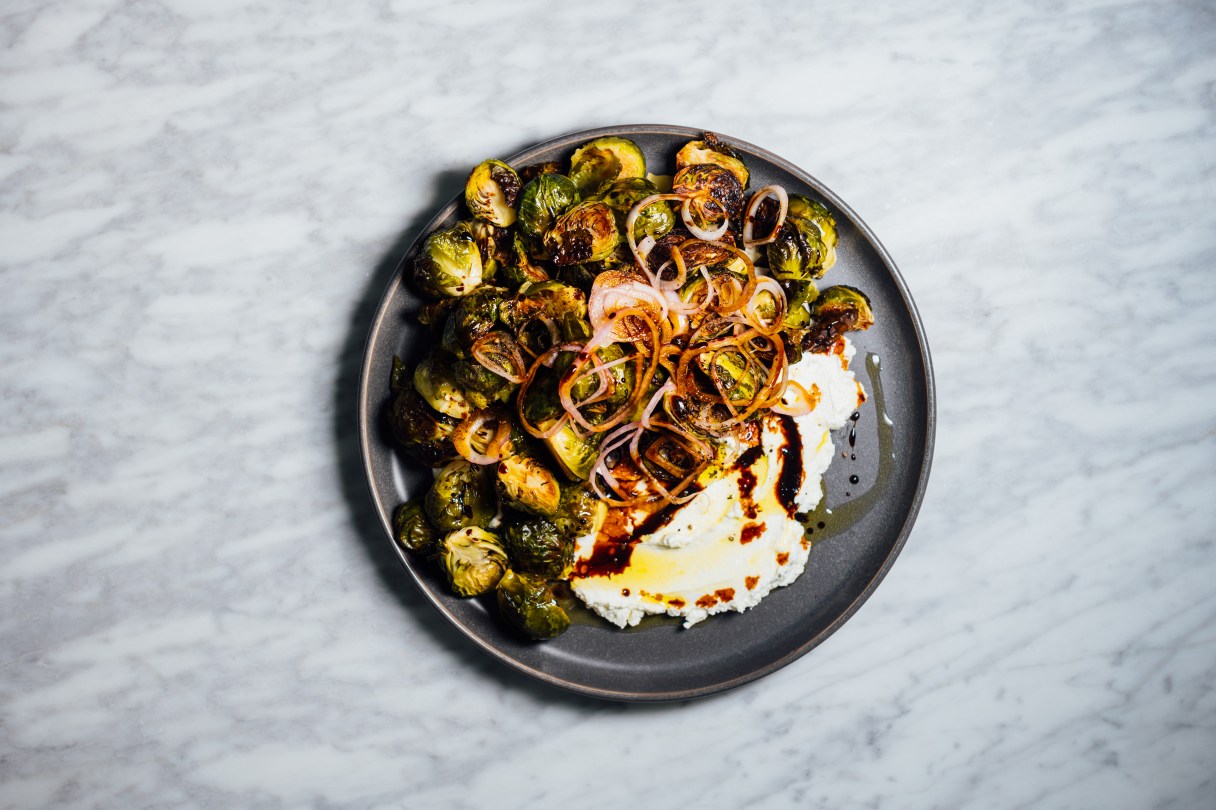
Brussels sprouts are among the most traditional ingredients on the Thanksgiving table, and, when roasted, this unfairly maligned brassica shines brilliantly among the various sides.
Preparing them is easy: They don’t really need too much work to yield layers of complex flavor. First, trim the base, and halve or shred the sprouts. You can mitigate their sharpness by submerging them in a bowl of ice-cold water. (The low temperature will inhibit an enzyme reaction, improving their taste and helping them lose some of their funky smell and bitterness.) Just remember to drain and pat them dry once you’re done – with a kitchen towel, though a salad spinner will work wonders here.
Then, choose the right way to cook them. Boiling doesn’t always do them justice, often leaving them mushy and insipid – even boring. Roasting and searing are most certainly the way to go, and may spur one of the most marvelous transformations of any vegetable. Against high heat, they develop a medley of flavors and textures: crunchy leaves that shatter in a single bite, only to reveal a tender interior.
Brussels sprouts tend to benefit from a flavorful fat. A dab of butter, a dollop of ghee, a splash of extra-virgin olive oil, or chopped bacon or pancetta will all breathe new life into them. In this dish, they’re coated in good extra-virgin olive oil. Then, for a Middle Eastern and Mediterranean influence, they’re scattered over a bed of labneh. Buy some, or make your own: Simply strain full-fat yogurt through a cheesecloth set over a bowl for a few hours. The whey will drain out, leaving behind a velvety lusciousness that provides a creamy-tangy contrast to the crunch of the roasted sprouts. As all this unfolds in the kitchen, a quick cider vinegar pickle of shallots sits in a jar, waiting to add a much-needed spot of brightness.
The final touch comes in the form of the deeply fruity and woody flavors of date syrup or Turkish pekmez, a molasses made by concentrating grape juice. Be generous here. A little extra would not warrant a reprimand. (Honey and maple syrup are also good alternatives, though they won’t give the same degree of fruitiness.)