
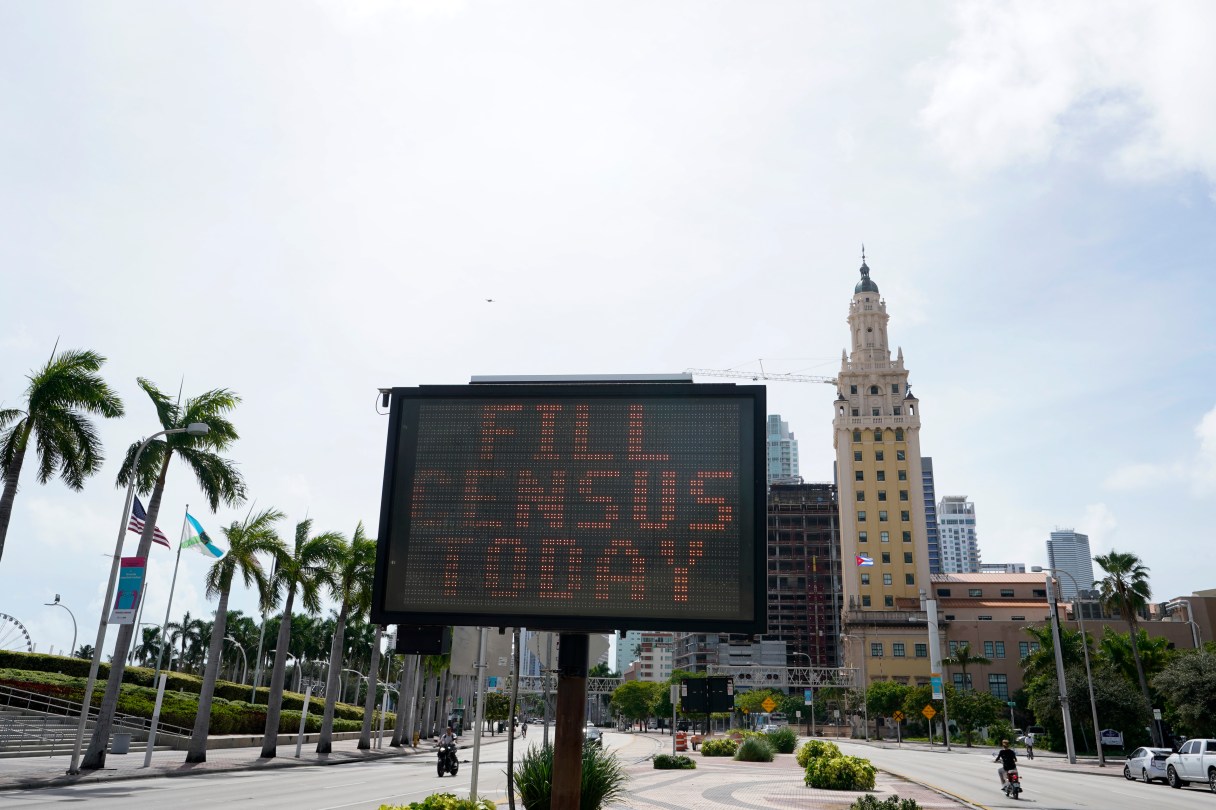
Shortly after the Supreme Court ruled that the Trump administration can end the 2020 census, a text message went out to field supervisors in Northern California telling them to start collecting the iPhones their census takers use for gathering household information during their door-knocking.
It was the fifth time in two months that they were given a new end date – this one Thursday – for the head count of everyone living in the U.S.
The Supreme Court decision Tuesday was just the latest case of whiplash for the census, which has faced starts and stops from the pandemic, natural disasters and court rulings, as well as confusion over when it was going to end and questions over whether minorities, immigrants, poor people and others would be counted accurately.
Minority groups have historically been undercounted in the once-a-decade census that determines how many congressional seats each state gets, as well as how $1.5 trillion in federal spending is distributed each year, and advocates said the two-week-shorter schedule will make that even worse.
“The Trump administration is acting out of fear. They fear a future America where we are majority minority. They don’t want to see the power shift,” Meeta Anand, a fellow at the New York Immigration Coalition, said Wednesday. “They will ignore the rules. They will do everything they can to make sure the true nature of our society is not reflected.”