
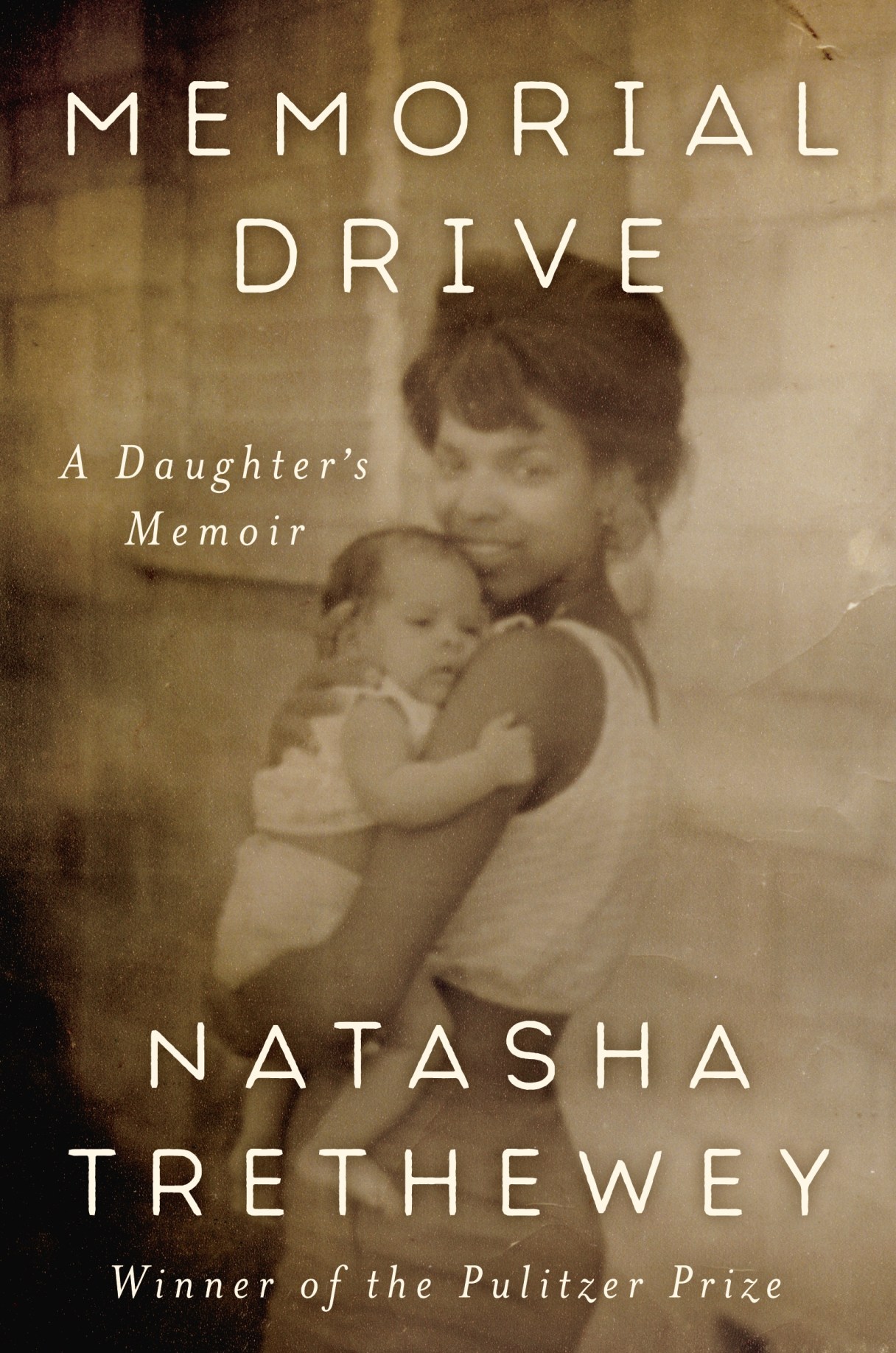
“MEMORIAL DRIVE: A DAUGHTER’S MEMOIR” by Natasha Trethewey (Ecco, 224 pages, $28).
Every photograph says “remember.” It’s no surprise then that poet Natasha Trethewey enters into the prologue of “Memorial Drive,” a memoir about her mother Gwendolyn Ann Turnbough, by looking at the last image of Gwendolyn, taken a few months before her murder. Her black dress blends in with the backdrop, and Trethewey says her mother appears to emerge “from it as from the depths of memory.” In this same way, Trethewey delves into memory like never before in this book and allows us to witness her resurfacing.
This may seem no big deal to lovers of Trethewey’s work. The former U.S. poet laureate is a poet of memory, after all, often spelunking through family photographs to find meaning and evoking dreams to concoct the perfect alchemy of metaphor. She details freckles on skin. We get the scent of moss floating through the streets on a visit to New Orleans. Her career addresses the collective memory and mythmaking of the South, and she weaves this long memorialized regional pain seamlessly into her personal history. She even notes that the street where her mother was murdered in Georgia, by her second husband, runs into the Confederate memorial Stone Mountain. It’s called Memorial Drive.
Poetry fans will notice many of their Trethewey favorites unfold on these prose pages about her earliest days as a “child of miscegenation” – growing up with her Black mother and white father in Gulfport, Mississippi, before their divorce. Her poems become almost like delightful Easter eggs in the first part of the book. We get the birthmark story of her poem “My Mother Dreams Another Country.” She lets us in on a secret about her poem “Incident,” in which the Klan burns a cross in her driveway during her infant memory. It’s a treat to see how many poems you can remember, but a knowledge of Trethewey’s oeuvre isn’t necessary to enjoy her account of a wonder-filled, albeit imperfect, childhood with her family in Mississippi: “Those afternoons passed deliciously slow; at teatime she’d serve iced tea with butter sandwiches – the brown edges cut off and soaked in milk laced with sugar. All the days sweet like that.”
And yet, less than 10 pages into “Memorial Drive,” Trethewey tells us her relationship with memory is fraught. She has, she says, cultivated a “mute avoidance of my past, silence and willed amnesia buried deep in me like a root.” I’m tempted to debate her self-perception. No reader would dare call Trethewey mute. Nor silent. Nor unwilling to recall.