
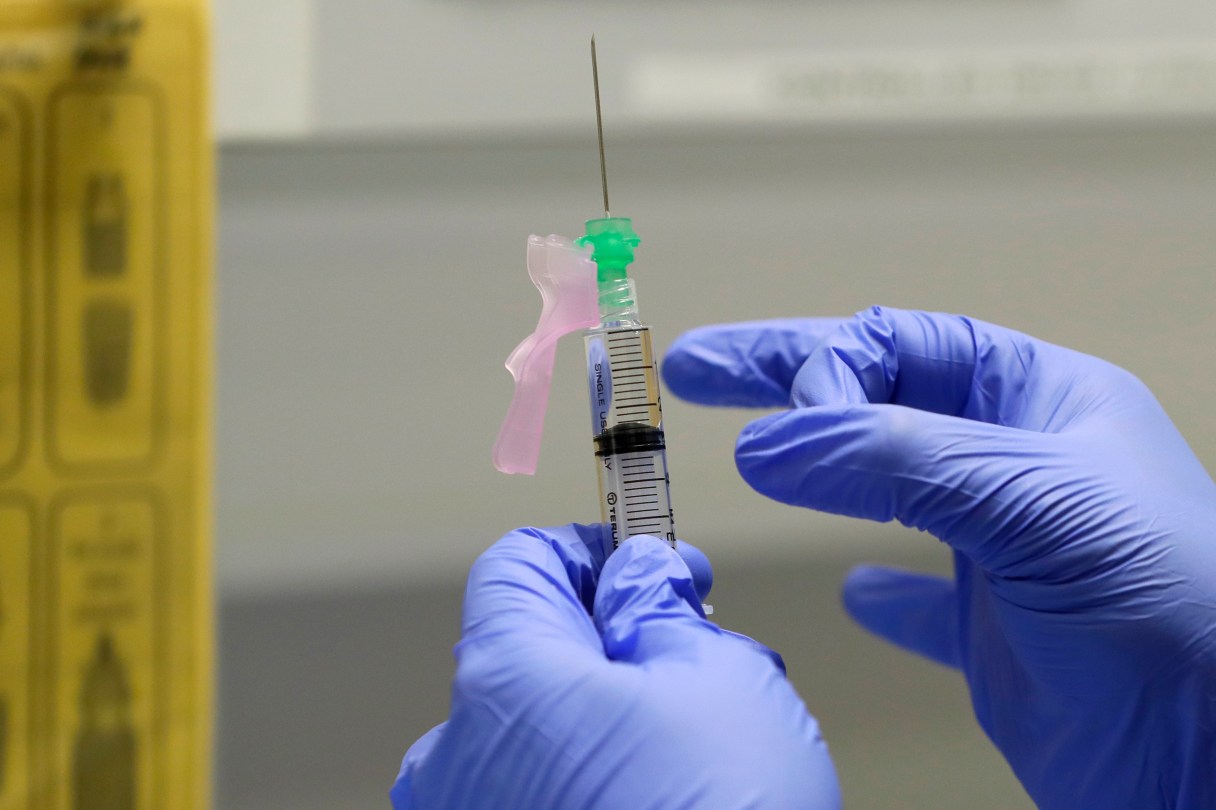
LONDON (AP) – U.K. researchers are preparing to infect healthy young volunteers with the virus that causes COVID-19, becoming the first to announce plans to use the controversial technique to study the disease and potentially speed up development of a vaccine that could help end the pandemic.
This type of research, known as a human challenge study, is used infrequently because some consider the risk involved in infecting otherwise healthy individuals to be unethical. But researchers racing to combat COVID-19 say that risk is warranted because such studies have the potential to quickly identify the most effective vaccines and help control a disease that has killed more than 1.1 million people worldwide.
“Deliberately infecting volunteers with a known human pathogen is never undertaken lightly, said Professor Peter Openshaw, co-investigator on the study. “However, such studies are enormously informative about a disease, even one so well studied as COVID-19.”
Human challenge studies have been previously used to develop vaccines for diseases including typhoid, cholera and malaria.
Imperial College London said Tuesday that the study, involving volunteers aged 18 to 30, would be conducted in partnership with the government’s Department for Business, Energy and Industrial Strategy, the Royal Free London NHS Foundation Trust and hVIVO, a company that has experience conducting challenge studies. The government plans to invest 33.6 million pounds ($43.4 million) in the research.