
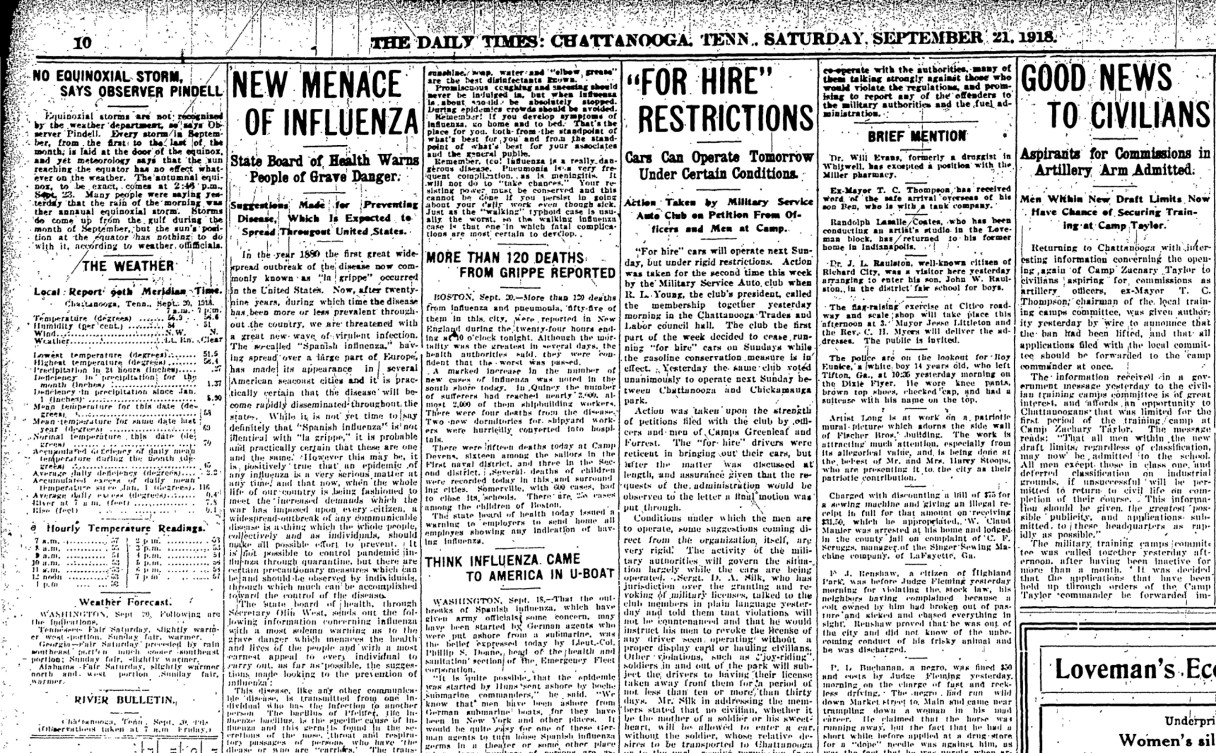

It started out normal, just like any year – just as normal as 2020.
American soldiers were serving overseas as World War I trudged into its fourth year, and then-President Woodrow Wilson was in the seventh year of his two-term presidency. A deadly virus that would soon bloom into a pandemic quietly loomed even for the president himself.
The year was 1918 and an influenza virus – that for the next century and afterward would be known as the Spanish flu – was first identified in military personnel that spring, according to historical information housed by the U.S. Centers for Disease Control and Prevention in Atlanta. People a century ago often referred to influenza as “la grippe” or simply “grippe.”
In less than two years, the virus would claim an estimated 500 million lives worldwide, as many as 675,000 of those deaths in the United States. The Spanish influenza was unique for a high mortality rate in people younger than 5, those between 20 and 40 and people 65 years and older, according to the CDC.
The flu’s origin was unknown. It spread through North America, Europe and Asia in three waves in 1918-1919. In the U.S., the spring wave was relatively mild but the virus made a savage return in the fall of that same year.