
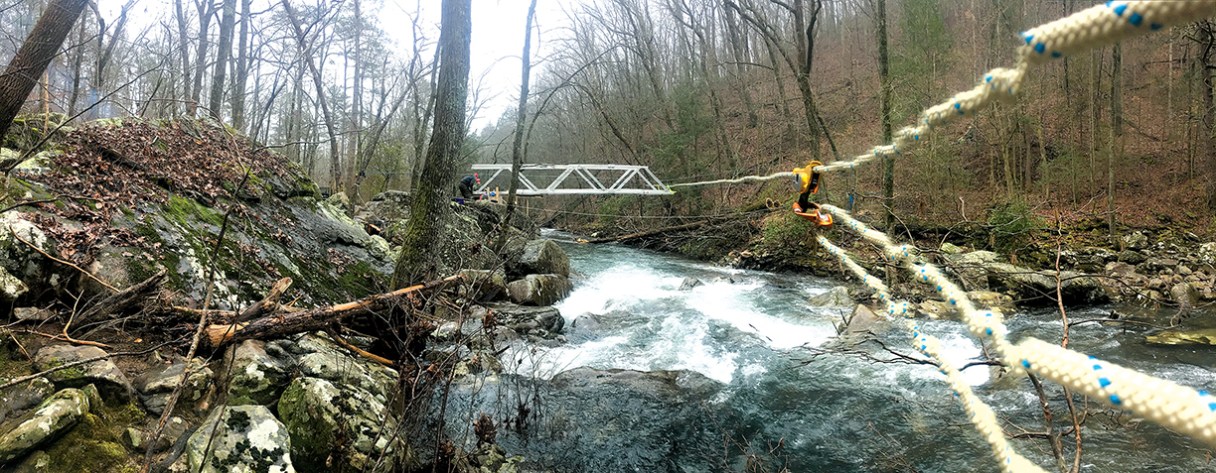
Imagine beginning your hike near the Cumberland Gap at the Tennessee/Kentucky border, only to travel 300+ miles on the same natural trail to the Tennessee River Gorge near the Tennessee/Georgia border. That’s the ultimate vision for the Cumberland Trail, the first designated state scenic trail in Tennessee.
Today, the trail is about 75% complete. As Cumberland Trail manager and Tennessee historian Bobby Fulcher says, connecting the final pieces is all about working together and finding common ground.
“That’s what it takes along the Cumberland Trail – piece after piece; property after property. It’s about partnership,” he says.
By all accounts, this Tennessee State Parks endeavor is an ambitious one, with many conservation groups and donors playing critical roles in the connectivity of the trail over the last 50 years.
As progress continues, Fulcher and Tennessee State Parks have increasingly called upon the team at The Land Trust for Tennessee to help blaze the trail ahead.
“It was a real blessing for us when The Land Trust for Tennessee took interest in the Cumberland Trail, ’cause it’s made a big difference – not just around Chattanooga, but up and down the trail, all the way up toward I-40,” says Fulcher. “And in each case, it’s been a different means by which they were be able to be in the chemistry that made the deal.”
Explore the CT this fall
Looking to explore the Cumberland Trail? For a complete list of maps, resources, hikes and locations, visit cumberlandtrailsconference.com.
To date, The Land Trust for Tennessee, Tennessee Department of Environment and Conservation and State Parks have teamed up to conserve more than 30 miles of existing or planned trail corridor and critical viewsheds, with more on the horizon.
“The Land Trust for Tennessee has played a role in the acquisitions of property that needed that third-party element to make the deal,” Fulcher explains. “In the case of the Cumberland Trail, if you don’t make a deal, that can have long-term effects on our goal of connectivity because we are connecting private properties (and some public) over the course of 300 miles. You have to find a way to work with the landowners and meet their needs.”
Finding Connections Through Common Ground
The Land Trust for Tennessee is a nonprofit conservation organization that works with landowners across the state to protect working farms, historic landscapes, mountaintops, forests and open spaces.
As Vice President of Conservation Emily Parish says, The Land Trust uses every instrument in its conservation toolkit when it comes to supporting the Justin P. Wilson Cumberland Trail State Park.
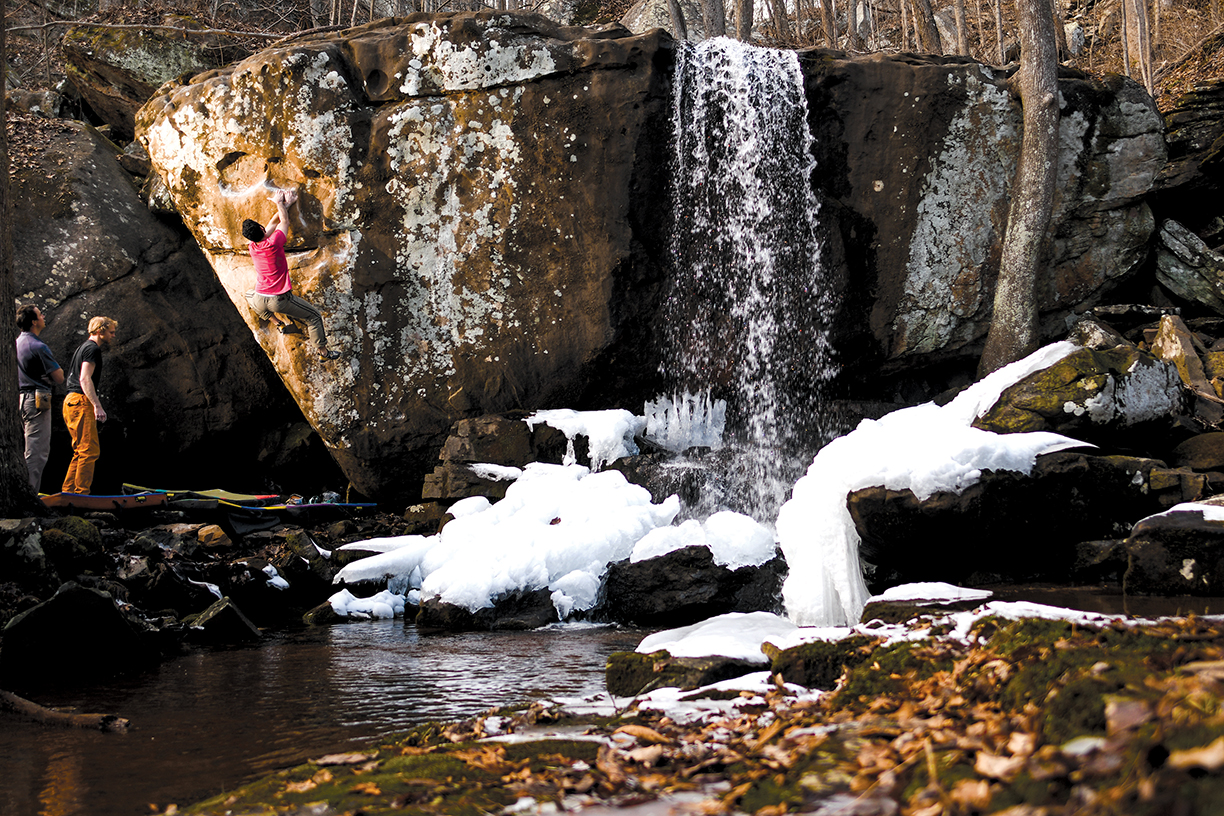 Contributed photo by Adam Johnson, courtesy of Southeastern Climbers Coalition / Climbers are seen near the Graysville Mountain RMA section of the Cumberland Trail.
“Our work over the years to conserve and connect the Cumberland Trail has been tremendously varied,” says Parish. “It’s truly been like helping piece together a large, complicated and incredible puzzle. All the pieces are there, and they are all unique.”
Fulcher and Parish both have hope their work will continue given their ability to meet landowners’ needs while protecting land important to the state.
“In some cases, we have worked with landowners on conservation agreements where they kept their land, protecting critical viewsheds or allowing passage of the trail,” Parish says. “For others, we helped the landowner donate their land outright. We’ve also assisted the state in purchasing thousands of acres. There’s no one-size-fits-all solution to conserving land, and that’s why we are always looking to be flexible and find the right solution for all involved.”
Both Fulcher and Parish are amongst the first to acknowledge that the Cumberland Trail would not be possible without the great work of many other conservation groups and leaders. These include the Cumberland Trails Conference, Friends of the Cumberland Trail, TennGreen Land Conservancy, The Nature Conservancy Tennessee Chapter, Tennessee Trails Association, Tennessee Federation of Garden Clubs, Open Space Institute, Lyndhurst Foundation, Chattanooga Audubon Society, Southeastern Climbers Coalition, The Conservation Fund, and the State of Tennessee.
The best part, Parish says, is as a result of this collective work, Tennesseans and visitors from across the world now have an extraordinary trail to explore – and it’s only getting better.