
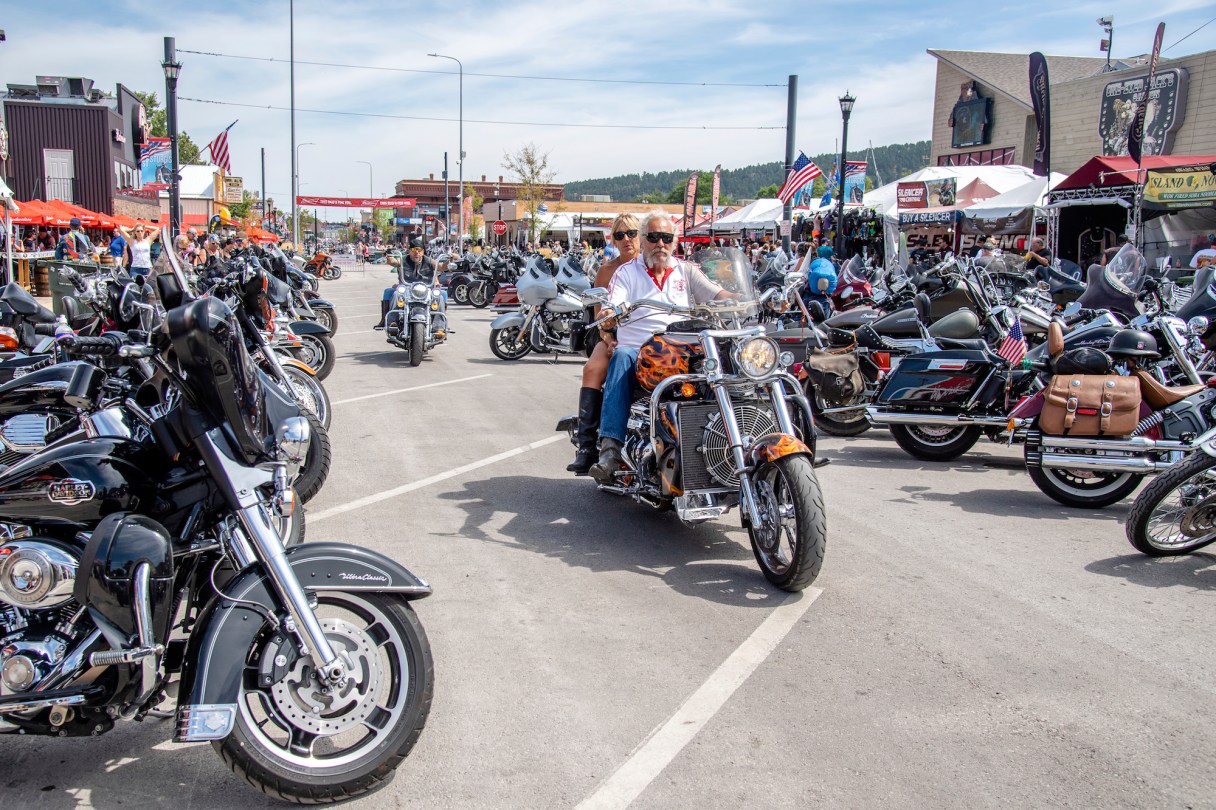
Perhaps no sight could be stranger during a pandemic than 250,000 maskless motorcycle riders roaring into Sturgis, South Dakota, last month, ready to crowd into stores, concerts, strip clubs and bars.
Stranger still, however, is the fact that, although some local residents pleaded for the rally to be canceled, city officials couldn’t do it. Riders had pledged to come to Sturgis whether they canceled the rally or not. “You can’t cancel what you don’t own,” promoter Randy Peterson explained, implying that the rally belonged to its participants more than to any authority.
In truth, the rally should have seemed anything but strange, given its association with right-wing populist politics. As a veteran political reporter told me in 2017, “I am not sure everyone (at the 2016 rally) supported Trump, but they sure as hell didn’t support Clinton.” In fact, the conservative politics of the rally and its attendees goes much farther back than Donald Trump’s election and demonstrates that rather than inventing them, Trump merely benefitted from his unapologetic reproduction of the cultural ideals long on display in Sturgis and throughout the United States.
South Dakota’s right-wing populist political history began in the 1970s with a local version of Trump: attorney general, two-term governor and future member of the South Dakota Motorcycle Hall of Fame, William Janklow. Along with promoting the rally, Janklow’s legacy includes saying that the way to stop the leaders of the American Indian Movement was “to put a gun to their heads and pull the trigger.” In 2008, Republican presidential candidate John McCain campaigned on the rally’s main stage. In 2018, former Republican vice-presidential candidate Sarah Palin rode a Harley in the rally’s charity event.
READ MORE: Revved by Sturgis Rally, COVID-19 infections move fast, far