
The civil strife that struck the United States in 1861 made its way to Hamilton County in the summer of that year. On June 8, a referendum ordered by the state legislature approved what was by that time a fait accompli – Tennessee joined the Confederate States of America. But not without significant dissent. While the state voted 108,274 to 47,247 in favor of joining the Confederacy, the vote in East Tennessee was 32,923 to 14,780 against. In Hamilton County, the vote was 1,260 to 854 against, with the majority of the votes to secede coming from Chattanooga itself. Representative of the northern end of the county, the vote in the 12th Civil District was 149-1 against.
The undoubted leader of the Unionists in that quarter of the county was William Clift, Hamilton County’s richest man, who was characterized as a “violent Unionist,” who “flung defiance in the face” of the Southern Confederacy. His home in Soddy became a way station for Unionists fleeing north to join the Federal army. Eventually, a Cumberland Presbyterian campground in Sale Creek was appropriated, and the Union men of the area began to mass there.
While it was no secret Clift was a hard core Unionist, the Sale Creek facility began to assume the appearances of a military camp, alarming local Confederates. Local rebel companies began to mass, and about 300 or 400 men gathered in the area of what is now Dayton, but was then known as Smith’s Crossroads, around Sept. 15, 1861. Upon hearing of this movement, the local Unionists temporarily dispersed.
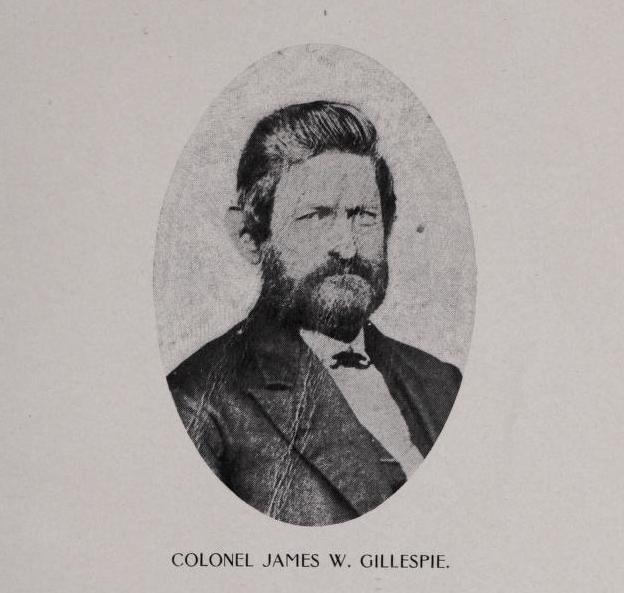
At Smith’s Crossroads, a prominent Rhea County citizen, James W. Gillespie, assumed command of the Rebel force. Gillespie was a medical doctor, a one-time member of the General Assembly, and a veteran of the Mexican War who, as had Clift, opposed secession. But like many Tennesseans, once the state joined the Confederacy, he joined the newly formed state army, of which he was an assistant inspector general. He and Clift were well-acquainted.
Clift and Gillespie met and agreed to the terms of a truce. Gillespie was concerned with Union men massing and Clift facilitating a pipeline to the Federal army. Clift complained that Union men were being forced into the Confederate army. So recently on favorable terms as neighbors, Clift and Gillespie and their men wished to avoid violence, which was consistent with Tennessee Gov. Isham G. Harris’ policy at that time to handle the East Tennessee Unionists with kid gloves.