
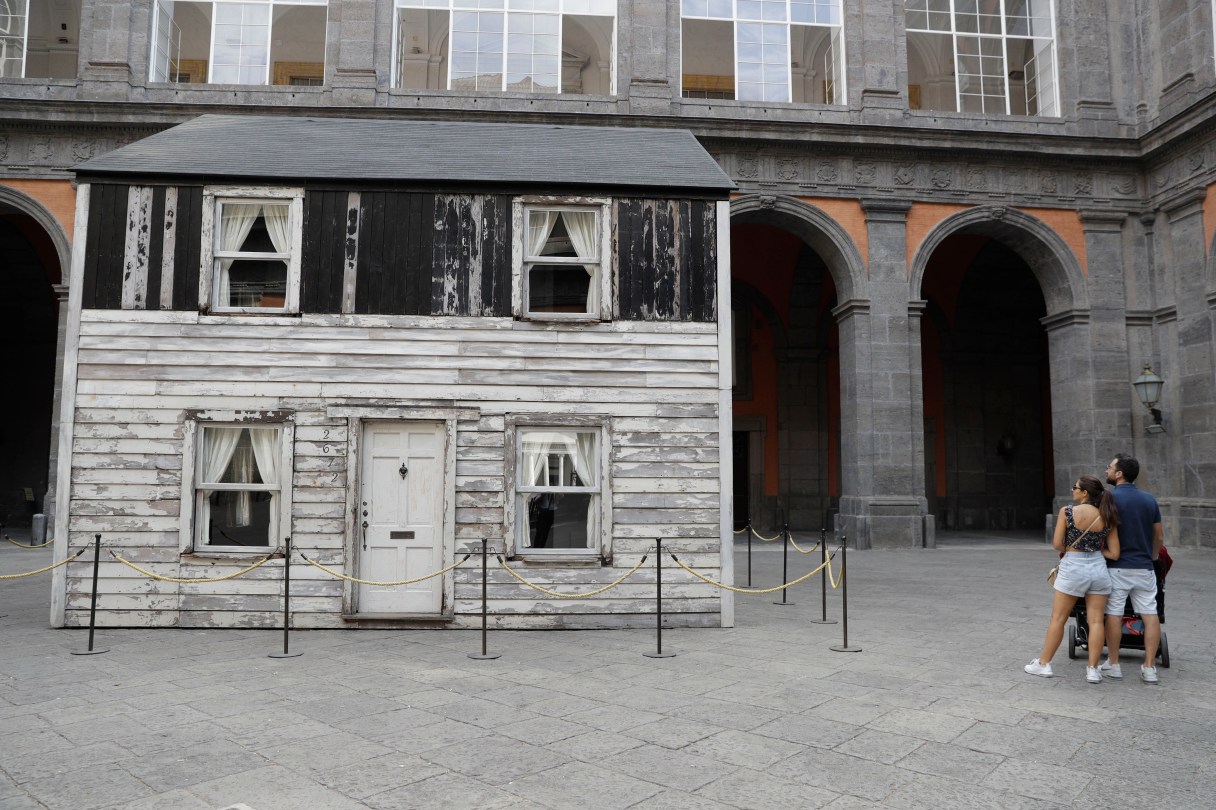
NAPLES, Italy (AP) – The run-down, paint-chipped Detroit house where U.S. civil rights icon Rosa Parks took refuge after her historic bus boycott is going on display in Italy in a setting that couldn’t be more incongruous: the imposing central courtyard of the Royal Palace in Naples.
It’s the latest stop for the house in a years-long saga that began when Parks’ niece saved the tiny two-story home from demolition in Detroit after the 2008 financial crisis. She donated it to an American artist who took it apart and rebuilt it for public display in Germany, and now Italy, after failing to find a permanent resting place for it in the U.S.
As racial tensions seethe across the Atlantic, the exhibition of the home starting Tuesday has taken on fresh relevance. The display is being accompanied by a repeating soundtrack entitled “8:46” and lasting that long.
It’s the original time prosecutors said it took for a Black man, George Floyd, to be killed by white police officers in a May slaying that has fueled the Black Lives Matter movement and protests around the nation in a reckoning with America’s history of slavery and racial injustice. Minnesota prosecutors later acknowledged the police officer had his knee on Floyd’s neck for seven minutes, 46 seconds, but said the one minute difference didn’t affect the case.
Artist Ryan Mendoza has been campaigning for more than five years to draw attention to the historic value of the home, where Parks lived for a short time after her 1955 defining act of defiance: refusing to give up her seat on a bus to a white passenger in Montgomery, Alabama.