
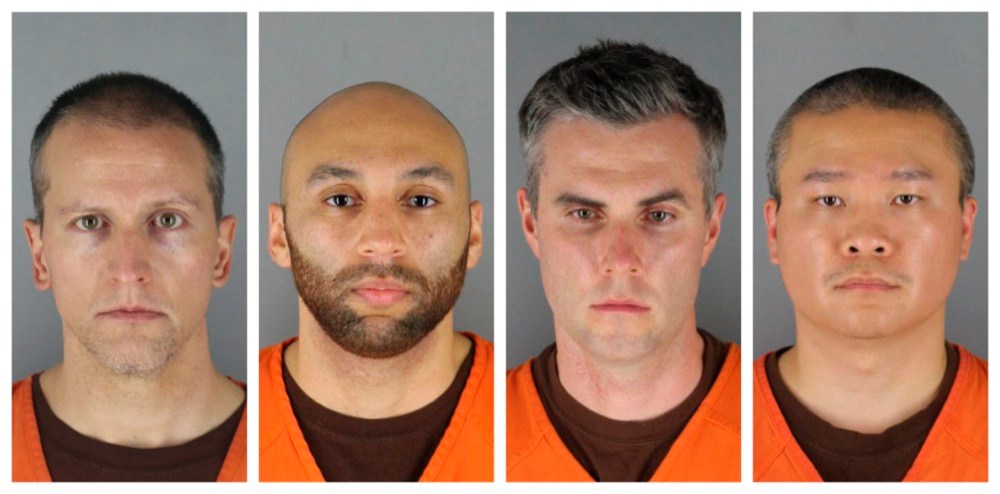
MINNEAPOLIS (AP) – The trial of four former Minneapolis police officers charged in George Floyd’s death will generate massive public interest when it begins in March, but as it stands, most people who want to watch the proceedings will be out of luck.
The judge overseeing the case has yet to decide whether cameras will be allowed. Supporters of audio and visual coverage say the high-profile nature of Floyd’s death, the outrage that led to worldwide protests, and courtroom restrictions caused by the coronavirus pandemic make this the right time and case to allow cameras in court. But the state attorney general’s office, which is prosecuting the case, opposes them, saying cameras would only create more problems.
“I just can’t think of a situation where it’s more important than a case like this for the public to see what’s actually transpiring in the courtroom,” said Jane Kirtley, director of the Silha Center for the Study of Media Ethics and Law.
“Justice that cannot be observed cannot really be considered justice. The public won’t believe what they can’t see,” she added.
In June, Judge Peter Cahill decided against allowing audio and visual coverage of pretrial proceedings because he said it would risk tainting the possible jury pool and the state opposed it. But Cahill, who is still weighing requests to try the defendants separately, said he would rule on trial audio and video coverage at a later date. It’s unclear when that ruling will come.