
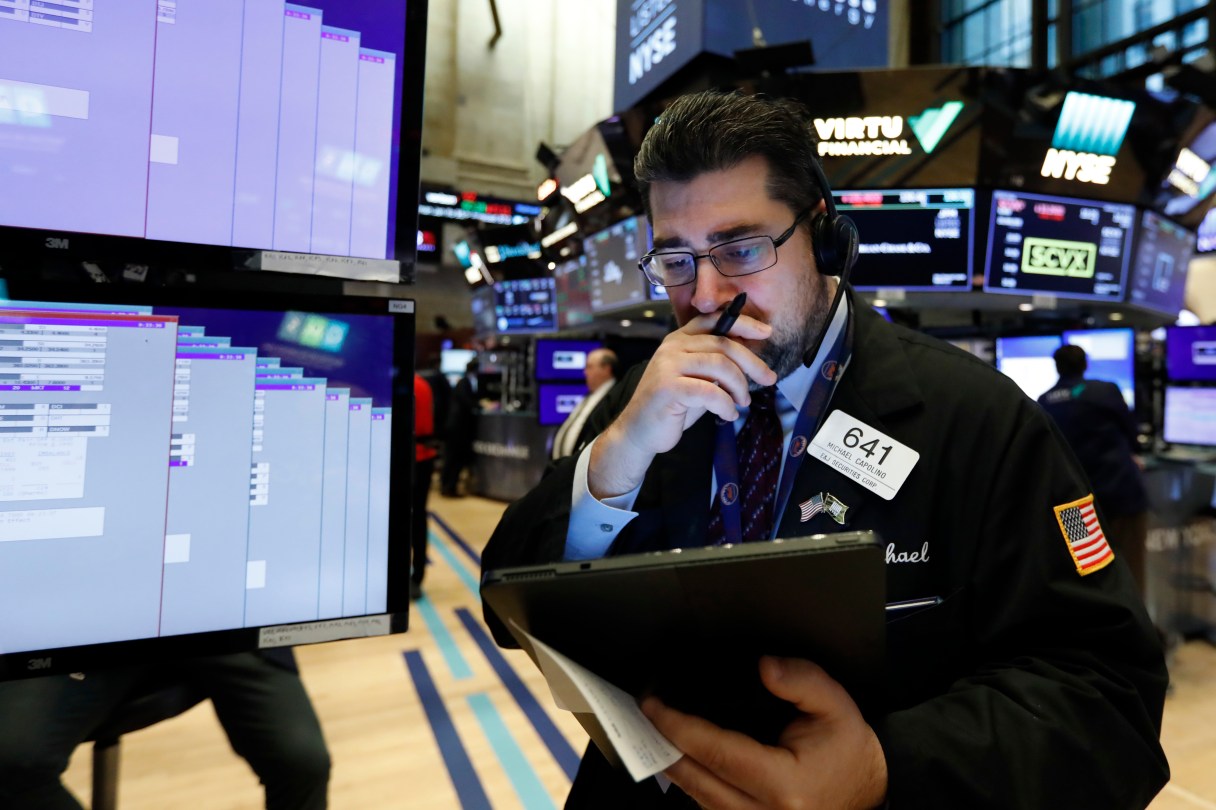
NEW YORK (AP) – Wall Street slumped Monday as markets tumbled worldwide on worries about the pandemic’s economic pain, though the S&P 500 had pared its losses by the end of the day.
The drops began in Asia as soon as trading opened for the week, and they accelerated in Europe on worries about the possibility of tougher restrictions there to stem rising coronavirus counts. In the U.S., stocks and Treasury yields weakened, while prices sank for oil and other commodities that a healthy economy would demand.
The S&P 500 fell 38.41 points, or 1.2%, to 3,281.06. It extends the index’s losing streak to four days, its longest since stocks were selling off in February on recession worries. But a last-hour recovery helped the index more than halve its loss of 2.7% from earlier in the day.
The Dow Jones Industrial Average fell 509.72, or 1.8%, to 27,147.70 after coming back from an earlier 942 point slide. The Nasdaq composite slipped 14.48, or 0.1%, to 10,778.80 after recovering from a 2.5% drop.
Wall Street has been shaky this month, and the S&P 500 has dropped 8.4% since hitting a record Sept. 2 amid a long list of worries for investors. Chief among them is fear that stocks got too expensive when coronavirus counts are still worsening, Congress is unable to deliver more aid for the economy, U.S.-China tensions are rising and a contentious U.S. election is approaching.