
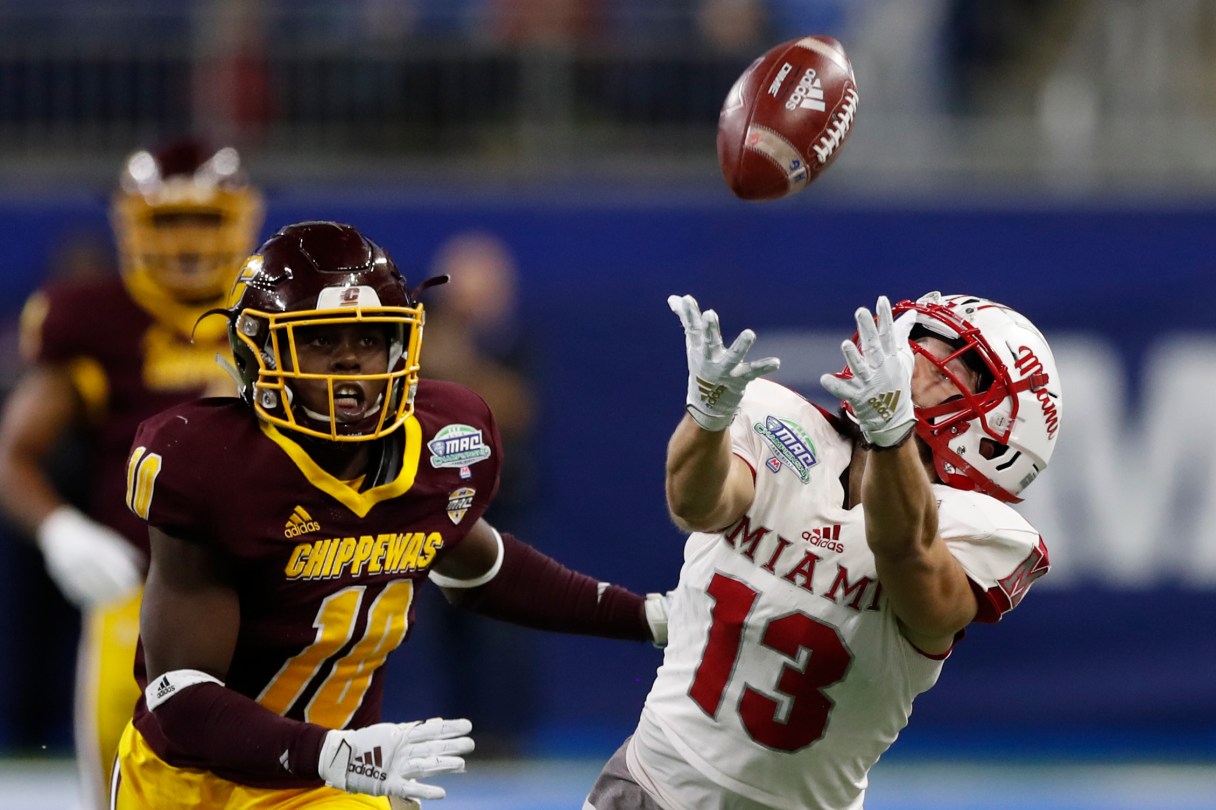
The Mid-American Conference, the first Football Bowl Subdivision league to postpone its season because of the COVID-19 pandemic, became the final one to jump back in, making it 10 out of 10 that will play this fall.
As university presidents in the Big Ten, Pac-12 and Mountain West conferences had done in the past week and a half, MAC leaders voted unanimously Friday to reverse their August decision to push football to the spring semester in 2020-21. The MAC will instead open its season Nov. 4.
Just like the other conferences returning to fall ball, the MAC cited advancements in COVID-19 antigen testing as key to the change of direction. The conference will begin testing athletes four times per week starting Oct 5.
If all goes well, by the first weekend of November, there will be college football from coast to coast. That seemed highly unlikely throughout much of the summer as the United States struggled to contain a virus that has killed more than 200,000 people across the country. The pandemic is still not under control in many states, but college football will go on in front of empty stadiums or limited attendance.
“The risk of college football spreading the virus is much less than the risk of fraternity parties or off-campus parties or concerts that are happening,” said Dr. Amesh Adalja, an infectious disease expert and senior scholar at the Johns Hopkins University Center for Health Security. “The risk is much more for coronavirus off the field than it is on the field.”