
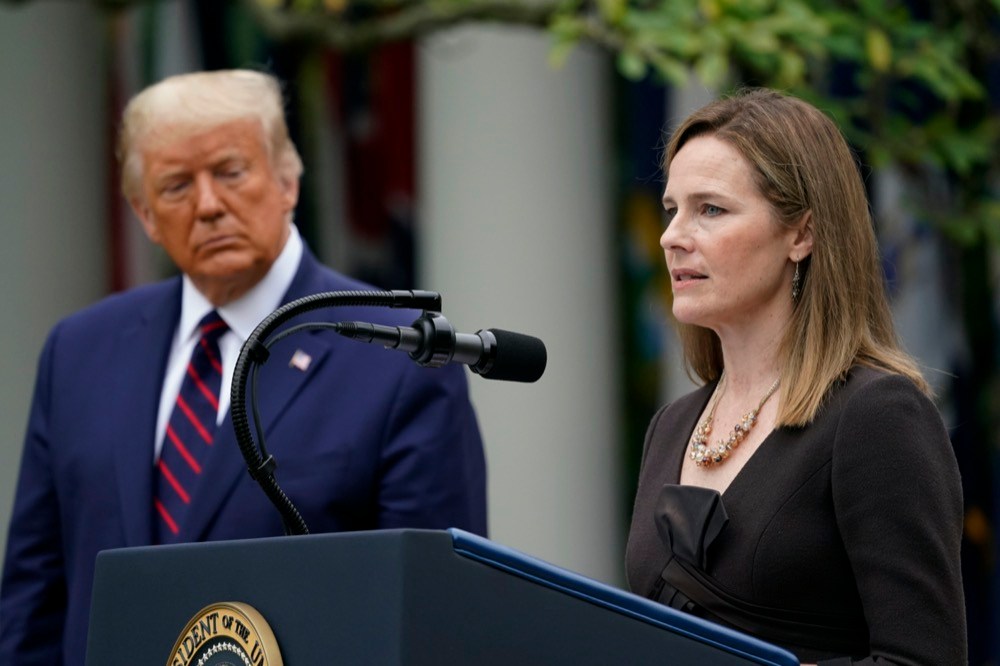
WASHINGTON (AP) – President Donald Trump’s nominee for the Supreme Court, Amy Coney Barrett, is on Capitol Hill on Tuesday for meetings with Senate Majority Leader Mitch McConnell and other pivotal Republican senators in preparation for her fast-track confirmation before the Nov. 3 election.
The judge is making a whirlwind visit to McConnell and eight other Republican senators in separate, private sessions. Democrats are confronting the limits of their power as they fight against the nomination and some have said they won’t meet with Barrett, who is expected to be swiftly confirmed for the seat held by the late Justice Ruth Bader Ginsburg by the end of October.
Unable to block Trump’s pick on their own, Democrats are aimed at avoiding mistakes that could hurt the party’s candidates in November. They are arguing to voters that Barrett’s nomination threatens the protections of the Affordable Care Act – a focus that Democratic presidential candidate Joe Biden has embraced and many Democrats see as a winning message. The court will hear a case challenging the constitutionality of President Barack Obama’s health care law just after the election, adding to the urgency of the issue.
Hours after Trump named the Indiana federal judge as his pick to replace Ginsburg, who died Sept. 18, Senate Democratic leader Chuck Schumer said a vote to confirm Barrett would be “a dagger aimed at the heart of the health care protections Americans so desperately need and want.”
But there will also be ample opportunities for Democrats to move off-message as partisans on both sides infuse the nomination battle with cultural, gender and religious politics.