
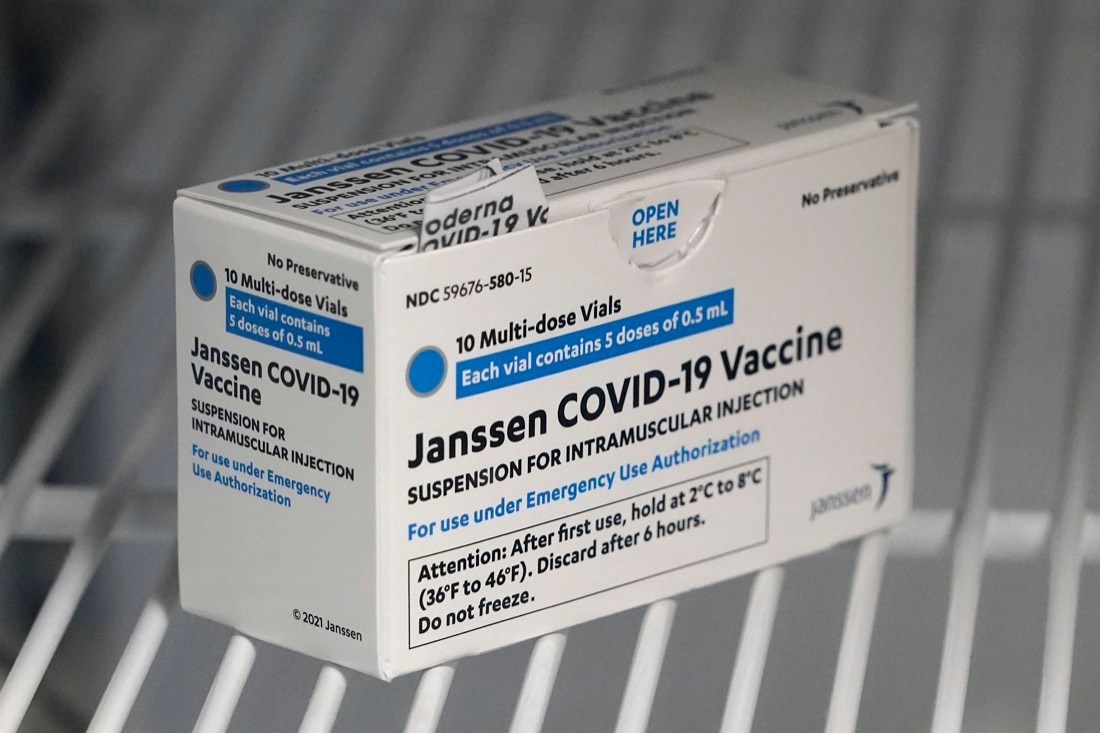
The company at the center of quality problems that led Johnson & Johnson to discard 15 million doses of its coronavirus vaccine has a string of citations from U.S. health officials for quality control problems.
Emergent BioSolutions, a little-known company vital to the vaccine supply chain, was a key to Johnson & Johnson’s plan to deliver 100 million doses of its vaccine to the United States by the end of May. But the Food and Drug Administration repeatedly has cited Emergent for problems such as poorly trained employees, cracked vials and problems managing mold and other contamination around one of its facilities, according to records obtained by The Associated Press through the Freedom of Information Act. The records cover inspections at Emergent facilities since 2017.
Johnson & Johnson said Wednesday that a batch of vaccine made by Emergent at its Baltimore factory, known as Bayview, cannot be used because it did not meet quality standards. It was unclear how many doses were involved or how the problem would affect future deliveries of J&J’s vaccine. The company said in a statement it was still planning to deliver 100 million doses by the end of June and was “aiming to deliver those doses by the end of May.”
“Human errors do happen,” Dr. Anthony Fauci, the nation’s top infectious disease expert, said Thursday in an interview on CBS’ “This Morning.” “You have checks and balances. … That’s the reason why the good news is that it did get picked up. As I mentioned, that’s the reason nothing from that plant has gone into anyone that we’ve administered to.”
J&J locked arms with Emergent in April 2020, enlisting the lesser-known company to manufacture the vaccine J&J was developing with federal money. At the time, Emergent’s Bayview facility wasn’t scaled for making millions of doses of a potential COVID-19 vaccine, according to the FDA records, which describe the plant as a contract testing laboratory that “did not manufacture products for distribution.” Upgrades in technology and personnel were required before Bayview could begin making what is known as “drug substance” material for the vaccine, a two-month process during which the required biological cells are grown.