
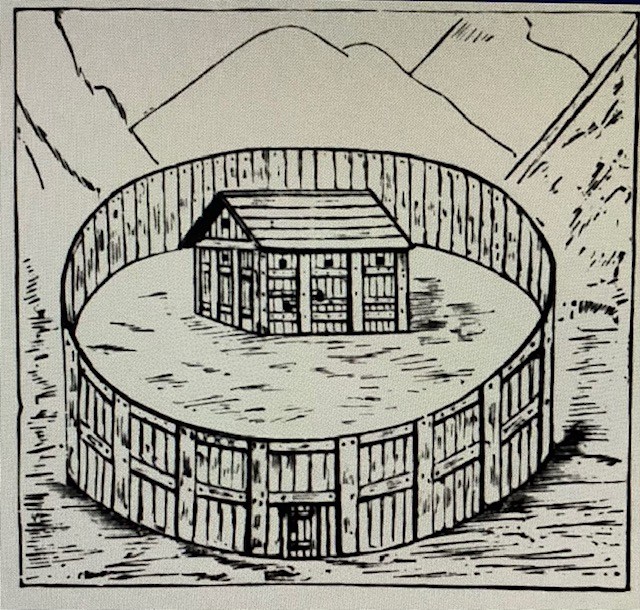
In the late 1860s, coal mining on an industrial scale came to Hamilton County and other areas of East Tennessee. In Soddy, Welsh immigrants chartered the Soddy Coal Company, leasing land from Col. William Clift. That initial effort had failed by the mid-1870s, and the New Soddy Coal Company was chartered, led by Clift’s son, Moses. Moses was a Confederate veteran and attorney with a number of business interests.
A state report in 1881 noted that the Soddy mine “does a very large and profitable business, the demand for the coal being beyond the ability to supply. It pays its miners on a scale regulated by the prices at which it sells coal.” There were frequent strikes at Soddy, including 1881, 1883, 1884 and in early 1885. Later, there would be strikes again at least in 1893, 1894, 1901, and 1922. The Soddy mines went out of business in 1929.
Miners used picks and explosives in holes far under the earth, and, as one historian has noted, were oppressed by the company stores, cave-ins and low wages. Coal mining was dirty, dangerous work for any amount of pay.
A statewide issue that festered between the 1870s and mid-1890s was the use of convict labor. The issue was complex, as it involved the racial politics of the times in that most convicts were Black, incarcerated in many cases for petty crimes. The state, looking to recover the cost of its prison system, leased convicts to mining corporations at rates much less than a fair wage to free labor. The non-convict workers were always under the real threat of the use of leased convicts, and that threat was a cudgel used to stifle dissent about wage rates and working conditions. It was employed as a highly effective strike-breaking technique.
On June 4, 1885, the Democrat-leaning Chattanooga Daily Times published an interview with Moses Clift in the context of a strike or lockout at the Soddy mine. Clift claimed, among other things, liberal wages for company employees. On June 6, the Republican organ, the Chattanooga Daily Commercial, published a letter from “A Digger” at Soddy, who anonymously refuted Clift’s claims, contrasting the “royal and sumptuous extravagance of living” enjoyed by the company’s officers with the “rage and indigent condition presented by the families of those who do the labor.”