
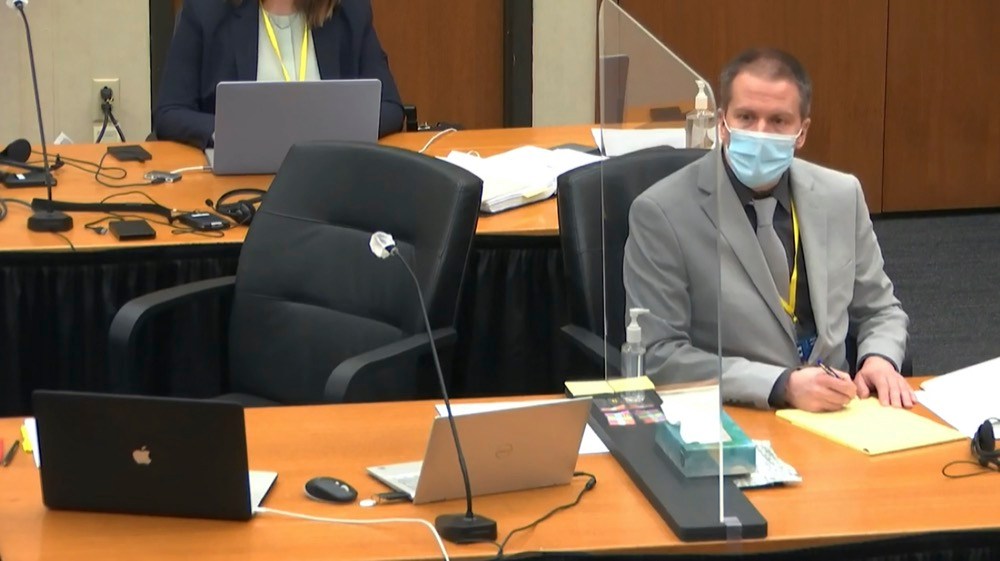
MINNEAPOLIS (AP) – The murder trial of a former Minneapolis police officer charged in George Floyd’s death has introduced viewers from around the world to a vast array of defense and prosecution tactics aimed at swaying the jury.
Some strategies and terms that have become part of Derek Chauvin’s trial are rare outside criminal courtrooms. The Associated Press has taken closer looks into them to better explain what viewers are seeing and hearing.
CONTRIBUTING FACTORS
Video shows Chauvin pinning Floyd to the ground, his knee on his neck, as Floyd yelled “I can’t breathe” before his body went limp last May 25. But defense attorneys are tasked with casting doubt on whether the former officer was directly responsible for the Black man’s death. They’ve sought to argue that other factors, such as drug use, may have killed him.
A medical examiner concluded last year that Floyd’s heart stopped, complicated by how police restrained him and compressed his neck. However, narrowed arteries, high blood pressure, fentanyl intoxication and recent methamphetamine use also were listed on the death certificate as “other contributing conditions.”