
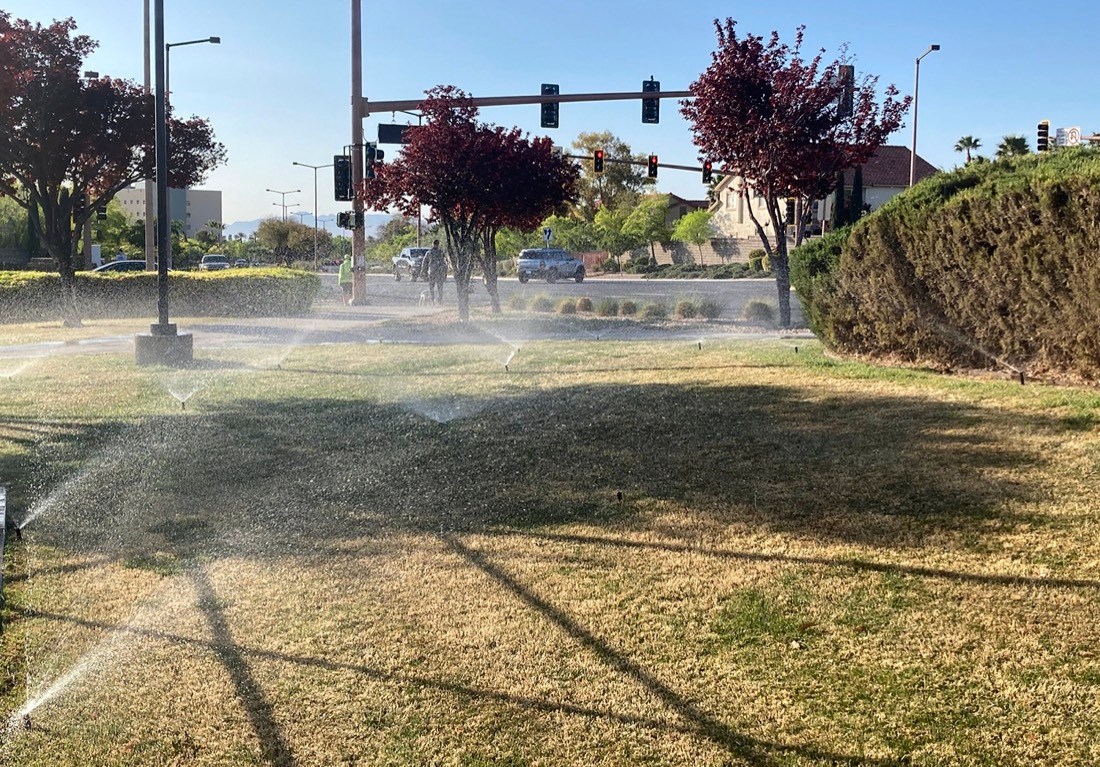
LAS VEGAS (AP) – A desert city built on a reputation for excess and indulgence wants to become a model for restraint and conservation with a first-in-the-nation policy banning grass that nobody walks on.
Las Vegas-area water officials have spent two decades trying to get people to replace thirsty greenery with desert plants, and now they’re asking the Nevada Legislature to outlaw roughly 40% of the turf that’s left.
The Southern Nevada Water Authority estimates there are almost 8 square miles (21 square kilometers) of “nonfunctional turf” in the metro area – grass that no one ever walks on or otherwise uses in street medians, housing developments and office parks.
They say this ornamental grass requires four times as much water as drought-tolerant landscaping like cactus and other succulents. By ripping it out, they estimate the region can reduce annual water consumption by roughly 15% and save about 14 gallons (53 liters) per person per day.
Las Vegas might be known for splashy displays like the Bellagio fountains on the neon-lit Strip, but officials say residents of bedroom communities and sprawling suburbs embrace conservation measures, including aggressive monitoring of sprinklers and leaky irrigation systems.